Address by Comandante Daniel,
Nicaragua’s Co-President
Event to Commemorate the 46th Anniversary
of the Army of Nicaragua’s Naval Force
August 17th 2026
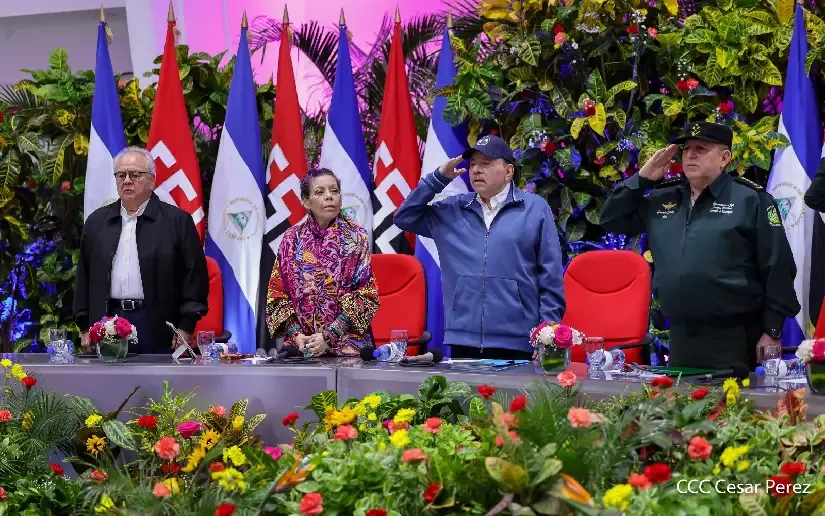
Good evening, Nicaraguan Brothers and Sisters; Compañera Rosario, Co-President of the Republic; Commander-in-Chief of the Military Forces of the Nicaraguan Army, Army General Julio César Avilés Castillo; Doctor Gustavo Porras Cortés, President of the National Assembly; Colonel General Bayardo Ramón Rodríguez Ruiz, Inspector General; Colonel General Marvin Elías Corrales Rodríguez.
Minister of Defense of the Republic of Nicaragua, Compañera Rosa Adelina Barahona Castro; Chief of the Police Forces of the Republic of Nicaragua, First Commissioner General Francisco Javier Díaz Madriz; Chief of the Naval Force, Rear Admiral Ángel Eugenio Fonseca Donaire.
Minister Advisor to the Presidency for the Promotion of Investments, Trade and Cooperation, Laureano Ortega Murillo; Attorney General of Justice; Minister of Transport and Infrastructure; President Magistrate of the Supreme Electoral Council, and Judge of the Supreme Court of Justice.
Minister of the Environment and Natural Resources; Minister of Development, Industry and Commerce; Executive President of the Nicaraguan Institute of Fisheries and Aquaculture.
Corps of Generals and Senior Officers; Members of the Military Council of the Nicaraguan Army; Compañero Co-Director of the Nicaraguan Institute of Tourism; Compañero Lumberto Campbell Hooker, Magistrate of the Supreme Electoral Council and Delegate for the Caribbean Coast.
Mayors of the municipalities of Granada, Altagracia, Corinto, Bluefields, Corn Island, Laguna de Perlas and the Mouth of the Rio Grande.
Delegates of the Presidency of the Republic for the Autonomous Region of the Southern Caribbean Coast; President of the National Council and Coordinator of the Government of the Autonomous Region of the Southern Caribbean Coast.
Her Excellency Ambassador Extraordinary and Plenipotentiary of the Republic of Cuba, Compañera Ileana Teresa Fonseca Lorente, and her husband.
Defense, Military, Naval, Air Attachés, Adjuncts and Heads of Military Missions accredited to the Republic of Nicaragua, who accompany us.
Former Chiefs and Officers of the Naval Force in the honorable condition of retirement.
Beloved relatives of Comandante Hilario Sánchez Vásquez, Comandante Richard Lugo Kautz and Deputy Comandante Mario José Alemán Escobar.
And our greetings to all the Members of the Naval Force who are present here, their Families; to the Compañeros and Compañeras of the different State Institutions; to the Compañeros and Compañeras of the Naval Force.
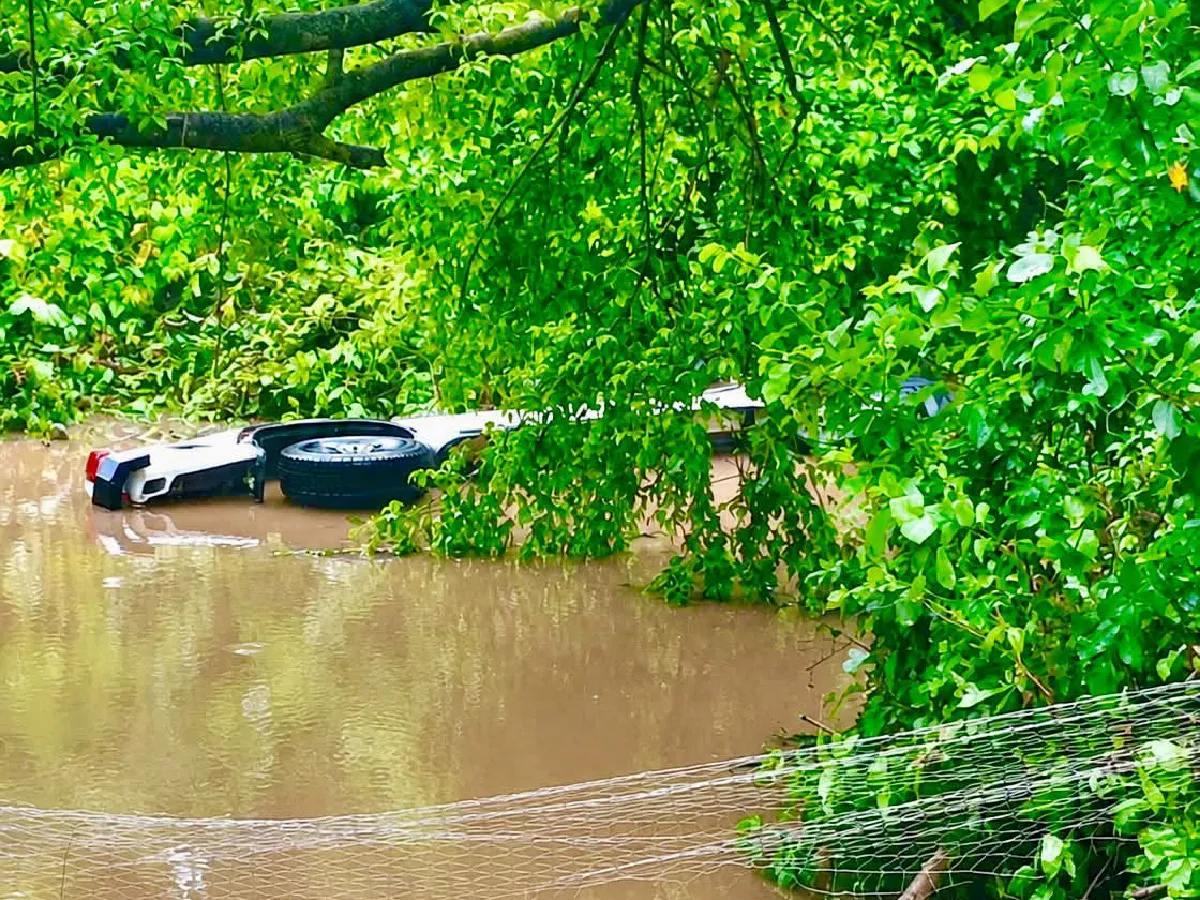
The Naval Force! The first thing I knew, boy, is of the great Naval Force that was built on the planet was to save Lives, and not only the Lives of Human Beings, but also of little animals. And, indeed, the flood came, and thousands of Human Beings and also birds managed to be saved, forest animals managed to be saved.
That's what I learned, that the first great naval force in the World was not built to kill, nor was it built to wage wars, nor was it built to destroy peoples.
But reading a little of the history of Nicaragua, one should pay attention to the details. And not only the history of Nicaragua, the history of all Latin America and the Caribbean, when the powerful Kingdom of Spain built great ships... What for? To come to take over these Lands, these Peoples and their riches; to come to enslave them, to colonize these Peoples.
That is what the great ships were for, sailing from the coasts of Europe to the coasts of these Indian-American Lands, to enslave them, to make themselves masters of these Lands.
The Spanish Conquest, then moved on to the appropriation, domination, enslavement of these Peoples, after Gil González Dávila and Andrés Niño disembarked from their ships. And it was Europe, the most cultured, Europe, the most advanced, Europe, the most developed, Europe, enslaving, and killing, and exploiting, and stealing, making itself the owner of all these Lands.
But the other Empire, the British came, since it did not want to be left behind, and Great Britain, England, decided to come with its ships... What for? To take ownership of the Caribbean Coast. Ships to enslave.
And the first conflict that resulted in an occupation of Nicaragua was the landing in 1878. Who landed at that time? The Spaniards were already all over these lands, and then the Germans came along. From Germany they decided to come with their boats, because there had been a conflict between a Nicaraguan citizen and a German Diplomat, Paul Eisenstück.
The conflict took place in Managua, when there had been no deaths there, there was fighting, but not massive, and it was between this German and the Nicaraguan. So then the German government demanded a financial compensation of US$30,000 and an Official Salute to the German Flag by the local Army.
For this, the Imperial German Navy, imagine, sailing all that way for US$30,000, but really to impose its might, as an Empire. They deployed six warships and sent them to Corinto and to Greytown.
They landed their troops in March 1878, until the President of Nicaragua accepted their terms. And the President was an eminent figure, whose families are still active.
The President was Pedro Joaquín Chamorro Alfaro. And so he decided to do everything the Germans said.
This was the President who ruled during the four years of Conservative government, from March 1st, 1875 to March 1st, 1879. he ruled for 4 years.
Then we have other landings. As we were saying, England occupied also, coming with her ships to the Caribbean Coast in order to steal that territory from Nicaragua.
And then came Zelaya's Revolution. Zelaya really was a President with revolutionary impetus, who developed many works of Progress, in Education as well, in all fields. He was a President who really did come to promote profound changes.
And what happened to Zelaya? The United States of America, who were there drooling all over the continent to see what they could swallow, they did not want Zelaya to negotiate with the Government of Japan to build the Canal for Nicaragua. Why? Because the Yankees wanted that Canal for themselves.
So, they overthrew Zelaya, and overthrew him with a Note from the US Foreign Minister, the Knox Note, where they gave him just hours to leave the Government, and US warships were already going to Nicaraguan ports. And indeed that happened, all because Zelaya had the courage to carry out those reforms and to try and build the Canal, but he did not have the strength to fight, and decided to leave Nicaragua.
And who was left at the head of the Liberal Party giving the fight? General Benjamín Zeledón, our National Hero who fought the Yankee troops, who confronted them there in Coyotepe; and they offered him the chance to surrender and that he was going to do well. But he responded via a letter that he sent to his wife on October 4th, which was Zeledon's birthday. He sent the letter to his wife, in which he explained to her that he was not going to surrender, that he would rather die before betraying his Nation, his family, or his children.
He sent that letter to his wife, he had written it on October 3rd, and October 4th was Zeledón's Birthday, and on October 4th he was murdered by the sell-out quislings along with the Yankee troops who were attacking him.
At that time, the US Marines occupied key points and turned the country into a de facto protectorate, controlling customs and the banking system.
Then came a second occupation. Why? Because when General Sandino refused to sign the Espino Negro Pact, which the Yankee troops were there agreeing with Moncada, and Moncada gave his consent whereby he handed the country over to the Yankees. Then, there Sandino said: I'm not selling out, I'm not surrendering, ever!
And more US ships came, to fight Sandino; they even brought aircraft, because Sandino was hitting them hard, and so with the aircraft what Sandino did was take to the mountains so he was no longer a target for them.
Because Sandino had defeated them and had almost taken over the Yankee barracks in Ocotal, the Yankees started declaring that they would send aircraft, that they would send aircraft to finish them off. Then the aircraft started coming, in large numbers.
So Sandino said, we'd better withdraw, we're really waging a war here now which is a war of positions, which we're not going to be able to win with the aircraft overhead, so we're going to the mountains, and they're going come looking for us in the mountains, and that’s where we want to see them. And they spent eight years trying to put an end to the Army in Defense of National Sovereignty. And they couldn't! In the end, the Yankee troops in Nicaragua had to retreat, defeated.
Here we have the data of what was the first landing and formal incursion of the British into Nicaraguan territory. It happened in 1633, when the English Captain Sussex Camock arrived at Cabo Gracias a Dios, on the Caribbean Coast, to establish a trading colony and make alliances with the indigenous peoples. This was in the year 1633 and the English settled there, of course.
The foundations of the British presence were laid; facilitating the arrival of pirates and merchants, giving rise to settlements in the area; marking the beginning of a long alliance between the English and the Miskito People, which lasted for more than a century, until Zelaya arrived, and Zelaya ended that alliance.
Then too, other boats arrived here. William Walker arrived, who also came by boat. Just look at all these movements that the Great Powers have made directed at small countries like Nicaragua, all with their ships and with good weaponry.
William Walker arrived at the Port of El Realejo, on June 16th 1855 in the Port of El Realejo, near Chinandega and León, with an initial force of 57 so-called “Immortals".
Their initial purpose was to intervene in the internal armed conflict after being invited by the group of Democrats who were fighting against the Legitimist Government, the Conservatives. The outcome of their presence was that they seized power.
After gaining advantage in the conflict, Walker was able to manipulate the political situation and proclaimed himself President of Nicaragua in 1856. He imposed measures which legalized slavery, confiscated land and he tried to impose English as the official language.
But here the Nicaraguans with Dignity did not allow themselves to be oppressed and began to fight; fighting under the command of a Nicaraguan who did not have great preparation or great specialization, but who had courage, General José Dolores Estrada, and so they set about organizing and they gave battle, famous battles, and we are now approaching the dates of our National Holidays, September 14th, which is our great celebration, because it is where a really much more powerful army, which had better weaponry, was defeated.
And there in San Jacinto, in that Hacienda, reinforced with the Indian archers of Matagalpa, there they joined forces and set out to resist the Yankee troops who were advancing, they were advancing, and the head of the Yankee troops was a Colonel, a former US army Colonel.
And that's where this extraordinary event took place, where the force of Workers, Peasants, Indigenous people, which was a small force, behind the farm walls, defending so that the farm was not taken over. And the Yankees were advancing, because they had automatic weapons, because they had greater military capabilities for their operations, they are deploying, they are advancing.
But a soldier, a humble soldier, who no longer had any more cartridges to shoot, and the cartridges that the fighters of San Jacinto had were for single-shot rifles, they were not repeating rifles that could hold a good quantity of bullets; then, if the Nicaraguans fired a shot, they would run out of bullets, and that’s what happened to Andrés.
Then Andrés, instead of running away, grabbed a stone from the San Jacinto farmyard wall and cast it against a gringo who was jumping the wall, and knocked him down. And that loss added to the death of Byron Cole, who was the Colonel who led the Yankee troop there, a Colonel, well prepared and trained, Byron Cole died in combat, and Andrés gave the coup de grâce. And the Yankees then had to flee.
And then, they were retreating, retreating, retreating, but where to? To look for the ships sent from the United States to rescue them there in the area of San Juan del Sur, in all that area, and where some of them were resisting in a school, a teacher grabbed a torch and went with the torch and set fire to them, and so then they went searching for the boats. And they left Nicaragua fleeing to the United States, where they were received as heroes, of course.
So you can see how many foreign powers have landed their troops here in Nicaragua, so many foreign powers! The United States, England, Germany, that’s three Powers, have I missed one there? Three foreign Powers.
Ah, Spain! How could one forget Spain! Spain had already destroyed us, despite the resistance of Diriangén. Spain dominated for three centuries, until in the end the Peoples rebelled with the rebellions in Mexico, and the Cry of Hidalgo. Hidalgo, a priest who cried out for independence.
Already at that point Bolívar was defeating the Spanish all over the Southern Subcontinent of Our America, and when Bolívar's Forces joined together, Bolívar's Liberating Army coincided with the struggle, the Resistance of the Mexican People; that is, the larger countries, and in the middle of them Central America, Central America too had its rebellions; but what really allowed Central America to become independent from Spain, were the defeats Spain suffered in the South of Our America, with Bolivar, and too in Mexico. And since we were small countries here in the middle of it all, that made it easier for independence to be declared.
There was more than one quisling sellout who wanted, in the same way that in Mexico the Spanish sought to leave the Iturbide Empire there, that Central America should ally with the Iturbide Empire. But that was not accepted, it was not accepted.
But well, look at all this... How many years has it been? How many ships have been used since those years we have been talking about? How many have been used to save life, and how many have been used to cause death? They have been used more to cause death than to save life. And we see how criminal madness causes the great powers to continue building large warships, with greater armament, so as to continue killing, continue killing, continue killing.
We have to keep on defending the principle that ships, Naval Forces, should be to promote Life, they should be to help people when there are huge floods, to save people who are trapped on a small island and about to drown. As we have done, as you have done, beloved Compañeros and Compañeras.
This is a Naval Force that is not there to go around causing death, but rather to go around saving Lives, and of course it also has to protect our country’s Sovereignty. What does that mean? That the drug traffickers do not take ownership of our islands, of our borders. Because we have indeed been able to fight drug traffickers here.
And with the countries with which we have had some differences as to what our maritime boundaries are, we have managed to resolve them by peaceful means; that is, by resorting to the Court, by resorting to the corresponding authorities, and they are the ones who have issued their ruling, and we have respected those rulings. That is to say, there has not been a war here disputing maritime spaces, but rather everything has been resolved peacefully.
I would say that, one of the greatest peaceful victories we have achieved in this regard, is that we made our case and went before the international authorities, we made our case and demanded those 90,000 square kilometers, in total, imagine what a large area!
Back then, well, for a while it seemed that we were already going to clash, because the country with which we were disputing that enormous territorial extension is a very powerful country militarily, and they were constantly sailing there with their warships, even though they had no right to do so.
But there were also ships of the Nicaraguan Naval Force, which did not turn around and flee; they sailed there so that we could cease having to give way, and they did not flee. And there wasn't a single one killed. Until the judgment of the Court came, which gave the sea to Nicaragua, and now those waters who protects them? Our Naval Force and our Air Force take care of them, and there has been no major conflict.
So, what a World this is, in which people still don't understand, the imperialists of the Earth don't want to understand, that Noah's Ark must be built. All of us have to build it... How? With the commitment that they will no longer use their ships for wars, for bombing, for murder.
That is what would bring Peace, Peace in the World; it is a challenge that humanity has, yes, but it is a challenge where the people most responsible for this situation are being overcome and not that the challenge gets worse with more weapons of war being produced to go kill others.
Here what we need is to unite, to unite, to unite, in a struggle for Peace, for Peace. War leads to nowhere but destruction, death, grief
We live in Peace here in Nicaragua, and all Nicaraguans know that Peace permits us to have more employment, with Peace there is more capacity to build Houses, to build Roads, to build Hospitals, to build Schools. Everything that has been built in these years of Peace has never been built in the years when Nicaragua was not at Peace.
And I would say that, today more than ever we have to continue fighting for Peace, Peace, which is what Noah's gigantic Work will do. The day we have peace in the World, then we will be able to develop better, grow better, and eradicate hatred.
Today, beloved Brothers and Sisters, beloved Compañeros and Compañeras of the Naval Force, we know that you work hard; the work of Soldiers, of our Military who fight for Peace, is much more complex, much more difficult than the work of those Soldiers who are sent out to kill and to be killed.
So, on this Day of the 46th Anniversary of the Founding of the Naval Force of the Nicaraguan Army, Brothers and Sisters, Compañeros and Compañeras, embraces to all of you, embraces and Blessings to your families, embraces and Blessings to your communities.
I'm sure that, in the Communities wherever there is a Soldier, wherever there is a Compañero or Compañera from the Naval Force or a Compañero or Compañera from the Air Force, I'm sure those Communities feel proud. Because they don't see those aircraft overhead as happened in the era of imperialist rule, they don't see them murdering people, but rather rescuing, helping, evacuating the sick.
Likewise the Naval Force, likewise the Land Forces that protect producers so that they do not fall victim to crime, so that they do not suffer theft. Today more than ever coffee producers, rice producers, feel secure, and that allows them to invest more, and that allows him to give more employment to people.
And the more employment we have, the more the country will have the capacity to continue fulfilling the objective of eradicating Extreme Poverty, eradicating hunger, eradicating diseases that were previously not treated, so that people do not have to pay to go to a clinic or a hospital to be treated. That's over! Here health care is free, here education is free, here the fight against Poverty is being developed by everyone.
And to you, Brothers and Sisters, in this Event for the Naval Force we say: Let us Go Onward, Let us Go Onward, Let us Go Onward, so that Together we will overcome, we will overcome, and the Naval Force is a fundamental component in this Struggle.
Long live the Nicaraguan Naval Force!
Long live the Compañeros and Compañeras!
Long live the People President!
Sandino Lives On... The struggle continues!
Sandino Lives On... The struggle continues!
Sandino, Yesterday, Today and Always!
We will overcome!