VERDADES VERDADERAS CONSULTA
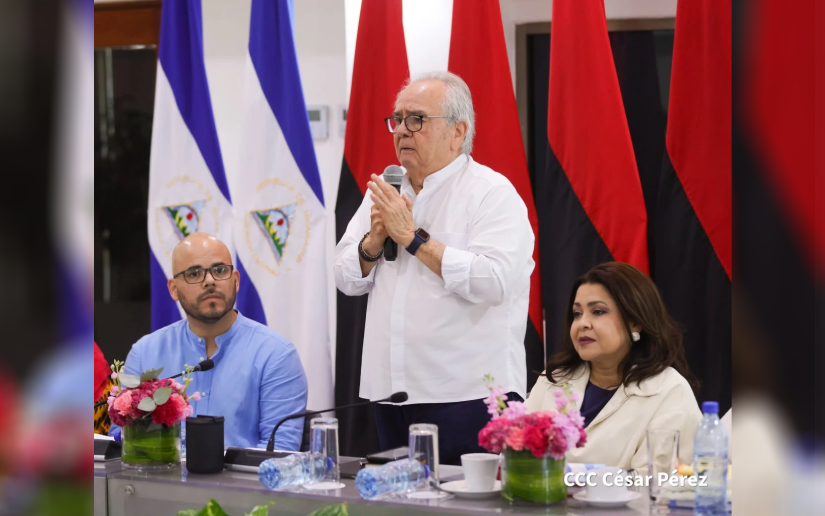
Exposición del Compañero Doctor Gustavo Porras,
Presidente de la Asamblea Nacional
a Comunicadores y Periodistas
durante el Proceso de Consulta
a Reformas Constitucionales
4 de Agosto de 2026
Buenos días, Compañeros y Compañeras, bienvenidos todos los Compañeros de los Medios de Comunicación, Comunicadores y Periodistas, Hombres y Mujeres que manejan Redes, el Compañero Daniel, Jefe de los Medios de Comunicación, Rafael, Camila y Maurice.
Quiero presentarles, Compañeros, a los Miembros de la Comisión Especial Constitucional que hemos estado trabajando por orientación del Comandante Daniel y la Compañera Rosario.
Aquí tenemos a la Compañera Arling Alonso, que es la Primera Vicepresidenta de la Asamblea Nacional; la Compañera Loria Dixon, que es la Primer Secretaria de la Asamblea; al lado de los Vicepresidentes tenemos a nuestra Compañera Heroína Amada Pineda, Segunda Vicepresidenta; y tenemos a la Compañera, amiga, correligionaria, María Haydée Osuna, que nos ha estado acompañando firmemente con el PLC en todo este Proceso, realmente.
Por el lado de las Secretarías, después de la Primer Secretaria tenemos a Wilfredo Navarro, Segundo Secretario de la Asamblea Nacional y el Tercer Secretario, el amigo Alejandro Mejía Ferretti, de la ALN.
Vamos a dar inicio a la Presentación. La dinámica es... Ah, bueno, si no he terminado, tengo enfrente, ya vi la mirada acusadora de mi Compañero Jefe de Bancada, Edwin Castro, el Jefe de Bancada; el Miembro de la Comisión Especial Constitucional, el amigo Lester Flores, el Jefe de Bancada del PLC; el amigo Mario Asensio, que es el Jefe de Bancada de BID.
Tenemos a la Compañera Diputada Auxiliadora Martínez, que es la Presidenta de la Comisión de Justicia, y al Compañero Doctor Wálmaro Gutiérrez, Presidente de la Comisión Económica. Somos 12 Compañeros los que conformamos la Comisión Especial Constitucional.
Hemos venido trabajando, en el trabajo que hemos venido haciendo, las orientaciones que hemos venido cumpliendo, hemos venido desarrollando estos elementos que vamos a presentarles a ustedes.
Todo esto nace a partir del 19 de Julio. Está claro que la orientación estaba dada, pero se hizo pública y fue transmitida por nuestro Copresidente, el Comandante Daniel, el 19 de Julio.
Es una orientación del Copresidente y la Copresidenta de llevar este Proceso durante todo el Mes de Agosto de Consulta, hasta llegar al Mes de la Patria, 1º de Septiembre, que nos proponemos aprobar en Honor al Mes de la Patria, esta Reforma Constitucional.
El Comandante Daniel dijo claramente: No habrá Elecciones. No habrá Elecciones que permitan, y refiriéndose a los que están agazapados, que permitan que ellos vuelvan a hacerse del Gobierno, hacerse del poder, para, obviamente, el objetivo es echar para atrás todo el Proceso que venimos llevando de Restitución de Derechos del Pueblo nicaragüense. Ese es el inicio, el Objetivo.
A partir de ahí comenzamos a trabajar, pero también nos dio indicaciones claras, es clarísimo, y repitió en la siguiente frase, que esos traidores golpistas: ¡No Podrán! ¡No Podrán! ¡No Podrán!, refiriéndose a que no podrán regresar.
En todo el Discurso mencionó tres elementos muy importantes: Habló de Elecciones con Dignidad, Elecciones nuestras, de los nicaragüenses. Entonces, esos elementos son los que comenzaron, y nosotros comenzamos a construir esta Presentación que les vamos a hacer el día de hoy.
Es decir, estos tres Conceptos él los sostuvo siempre, y esos son los Conceptos que nos guían en la Reforma Electoral; más bien, estos tres Principios: Estabilidad, Seguridad y Paz. Estabilidad, Seguridad y Paz.
Ahora, estos tres Principios entrelazados buscan un Objetivo definido por el Comandante Daniel, por la Compañera Rosario, por el Frente Sandinista y asumido por todos nosotros, y dirigido por el instrumento principal que tenemos los nicaragüenses, que es el Estado de nuestro Gobierno de Unidad, de Reconciliación y Unidad Nacional.
¿Cuál es el objetivo? La lucha contra la pobreza, ese es el objetivo exacto. Mientras nosotros no logremos vencer la pobreza, nosotros no podemos decir que somos libres.
Es decir, nuestra tarea fundamental, nuestro Objetivo es la lucha contra la pobreza, es salir victoriosos de la pobreza.
Vencer la pobreza, al vencer la pobreza realmente nosotros estamos rompiendo las cadenas que podrían, en un momento, res-tituirse, reconstruirse. Y aquí lo único que se va a restituir es el derecho de los nicaragüenses, junto con el triunfo sobre la pobreza. Entonces, vencer la pobreza necesita Estabilidad, necesita Seguridad y necesita Paz.
En una de las reuniones con los Sectores Productivos hubo una propuesta, una Referencia. Una señora dijo: "Yo propongo que sea primero, Paz". Y tiene razón, porque cuando vos revisás la Paz, es el bien más preciado, deseado y aspirado por los nicaragüenses.
Pero es que esto no está en orden de prioridades o de importancia, esto está en-trelazado. Entonces, bien podemos decir Paz, Seguridad y Estabilidad, o Paz, Estabilidad y Seguridad. Las tres cosas, pero esos tres elementos son los que nos van a permitir vencer.
Para comprender de lo que estamos hablando, comenzamos a revisar la historia, y esta es la historia de nosotros: Nicaragua se construyó en una lucha permanente contra la injerencia extranjera.
Nos tocó primero luchar contra el colonialismo español, desde los años mil quinientos y tanto hasta 1821, donde formalmente tuvimos la Independencia; es decir, estamos hablando de 300 años de lucha de los nicaragüenses, desde cuando sacamos a Gil González, que Diriangén y Nicarao juntos, expulsan a Gil González.
Y después viene toda la historia de lucha, en 300 años, y ahí pasamos por Adiact, por Agateyte, por todos esos Caciques que lucharon y fueron asesinados por el colonialismo español.
Bueno, en el siglo XIX también, lo único que cambió fue de cara fue la expresión de dominación extranjera. Entonces, ya en 1821 dijimos, Somos independientes de la Corona española, vamos a construir.
Después vinieron todas las luchas intestinas; cada quien quería ser, no pudieron consolidar Centroamérica, cada quien sería un país, y de eso en el momento cuando vino el expansionismo yanqui, y apareció William Walker y apareció Cornelius Vanderbilt Byron Cole, y aparecieron todos.
En ese ataque del filibusterismo yanqui, nos pusieron un Presidente, William Walker, se impuso él, y lo primero que hizo, el gran Decreto que emitió, fue restituir la esclavitud. Se erigió como Presidente, restituyó la esclavitud, estamos hablando de 1854, 1855 y 1856, y comenzó una nueva fase de lucha de nosotros los nicaragüenses.
En este caso no era contra el colonialismo español, ya era contra el Imperialismo yanqui desde su arranque. Y apareció Estrada, apareció Andrés Castro; lograron derrotar a Walker. Logramos los nicaragüenses unir a Centroamérica, y los centroamericanos no dejamos que Walker, después, tuviera éxito en los intentos que hizo por retomar la invasión a Nicaragua.
Así pasamos y llegamos a la Revolución Liberal, dirigida por el General José Santos Zelaya, que es Héroe Nacional. Y es que realmente esa fue una Revolución que trastocó las raíces de lo que existía.
Hasta ese tiempo, hasta Zelaya, es decir, el único matrimonio que era válido era por la Iglesia, los Derechos Civiles no existían. Únicamente el que era bautizado, o el que reconocía el Poder de la Iglesia podía ser enterrado en un Cementerio; en toda esa etapa, hasta la Revolución Liberal.
Pero además había un elemento central que hemos tenido los nicaragüenses, es la idea del canal. Entonces, Zelaya comenzó a trabajar en esa dirección, que es la misma idea que atrajo a los filibusteros, que es la misma idea en la que pensó Cornelius Vanderbilt, porque ese era su negocio, los barcos.
Y cuando Zelaya quiso democratizar y buscar cómo hacer un Proyecto Nacional, cayeron los gringos y vino la Nota Knox, de 1909, estamos hablando, y sale. Pero aparece Benjamín Zeledón, Funcionario Militar y Dirigente de la Revolución Liberal, y se levanta contra una intervención yanqui de 1912.
¿Dónde está Benjamín Zeledón enterrado? ¿Dónde está su cuerpo? Porque transitó a la Inmortalidad junto con todos, en el corazón de todos nosotros. ¿Pero dónde está?
Recuerden que lo vamos a ver en la entrada del Cementerio de Catarina. No entramos al Cementerio de Catarina para verlo, está afuera. Porque no permitieron enterrarlo adentro, porque los yanquis le ordenaron a la Iglesia, y la Iglesia no permitió el entierro en el cementerio, porque era prohibido enterrar a los proscritos.
Unos dicen que era masón y, por masón también; otros dicen... Es decir, hay mil cuentos, pero la verdad es que los yanquis, el poder de ese tiempo, no dejaron que lo enterraran y, gracias a Dios, lo pusieron más cerca de la gente, más cerca del Pueblo.
Pero Zeledón permitió que Sandino se diera cuenta de lo que era la intervención yanqui, porque él lo vio cuando arrastraron su cuerpo en Catarina, hizo su compromiso, que es la otra parte de la Historia. Allí es donde llegamos hasta 1927, el Pacto del Espino Negro, que ustedes oyen siempre, todos nosotros oímos y, además, nos acordamos de que, más bien, ese 4 de Mayo viene Sandino y dice: "No me vendo ni me rindo", y se fue con 30 hombres.
Pero miren lo que sucedió en Enero del 28; ahí estamos hablando del Pacto del Espino Negro en el 27; en Enero del 28, ¿Por qué todo este cuento? Porque llegamos a esto, llegaron marines norteamericanos, controlaron los Cantones Electorales y, entre otras cosas, nombraron como Presidente del Consejo Nacional de Elecciones al Brigadier General Frank Ross McCoy, llegando a la Presidencia del país el General Moncada, con un Gobierno absolutamente Pro-norteamericano.
En 1928, en 1930 y en 1932, las Elecciones fueron organizadas y dirigidas por tropas de ocupación militar. ¿Por qué ponemos esto? Porque recogimos la historia y no es mentira. Es la realidad de este país, las Elecciones a partir de 1927, que los gringos le prometieron a Moncada que iba a ser Presidente, con tal de que se rindiera, fueron dirigidas por los gringos, por el Ejército de Ocupación; es más, hasta la desvergüenza.
Ya habían tenido la desvergüenza de nombrar a William Walker 100 años antes; pues, 100 años después llegaban a la desvergüenza de decir: "Sí, vamos a hacer Elecciones y el Presidente del Consejo Electoral, se llamaba Consejo Nacional Electoral, va a ser el General Ross McCoy, ese es el que va a dirigir".
Es más, ahí está el Decreto donde dice que el suplente de él tiene que ser otro gringo, no puede ser un nicaragüense. Y ambos gringos nombrados por el Presidente de los Estados Unidos; ahí lo vamos a ver.
Pero esta parte histórica es importante para que veamos el paso trascendental que la Revolución, y que nos han orientado dar el Comandante Daniel y la Compañera Rosario, y que estamos dando todos nosotros, es salir de eso totalmente.
Pero, no solo eso, a esa altura, los Jefes de Mesa, por eso es que les dijeron que se tomaran los Cantones Electorales, porque los Jefes de Mesa de las Elecciones eran los gringos; eso lo habíamos oído en Discursos del Comandante, pero, bueno, nos dimos a la tarea de plasmarlo.
Pero esto no comienza en 1928, Compañer@s, sino que viene desde 1923. Es decir, todo eso es un período ignominioso de la Historia de Nicaragua; desde 1923 viene esto.
Se promulgó una Ley Electoral que los gringos mandaron a hacer, una Ley Electoral para estar preparados, y la Ley Electoral de Nicaragua se conocía como la Ley Dodds. Hay un señor Dodds, que era académico de los Estados Unidos, que el Departamento de Estado envió a asesorar al Presidente de Nicaragua, que era Adolfo Díaz, para que preparara la Ley Dodds.
Esta Ley estableció el Consejo Nacional de Elecciones; es decir, creó lo que es el Consejo Nacional de Elecciones, y la Ley lo que buscaba era institucionalizar el Bipartidismo, es decir, el concepto anglosajón de la Democracia, lo que conocemos que existe en los Estados Unidos, el Bipartidismo.
Y eso fue lo que hubo desde 1928 hasta el 78, porque la Revolución es la que rompe con eso; es lo que nosotros oímos desde chavalos, las Paralelas Históricas. Y ahí está, esta es una Papeleta Oficial de las Paralelas Históricas.
Esto que está aquí, miren: Partido Conservador, Partido Liberal Nacionalista, Candidato a la Presidencia, Adolfo Díaz; Candidato a la Presidencia, Juan Bautista Sacasa, el de la última cena de Sandino.
Estas eran las Paralelas Históricas y esta era la papeleta de ese tiempo. Pero uno dice: eso está ahí escrito, es un post, una diapositiva. No, ahí está, ahí están Las Gacetas, aquí está la referencia. Aquí está La Gaceta de la Ley Dodds, esta es la Gaceta del Martes 3 de Abril de 1923, y esta es la Ley Dodds.
Ahí viene donde habla de los Cantones Electorales, los Distritos Electorales; es cierto que esto fue hace 100 años, pero imagínense, para que miren cuál era la Democracia existente.
El Universo Electoral, el Padrón era así, chiquitito. ¿Por qué? Porque de cada 100 nicaragüenses, el Derecho al sufragio pertenecía solamente a los varones nicaragüenses de 21 o más años; Varones. Estás hablando que de cada 100 nicaragüenses, probablemente 48 eran varones; entonces, ya es un Padrón Electoral con el 48% de los nicaragüenses, pero además tenían que ser mayores de 21 años.
En ese tiempo la población de 20 años para abajo era aproximadamente el 60% de la población; o sea, de cada 100 nicaragüenses 48 eran varones, y de esos 48, de 20, 22 eran mayores de 21 años. Esa era la población.
Pero, además, si tenías 18 o más años de edad, podías votar si sos casado, casado por la Iglesia sí; y, además, si sabés leer y escribir. Con el nivel de Analfabetismo que encontró la Revolución, imagínense, esta era una población. ¿Quiénes votaban? Los que vemos en la foto, que son de saco y bombín, y probablemente, como les decían ellos, sus peones. Esa era la lógica de la Democracia que la Revolución encontró.
Por eso es que queremos meter esta parte histórica, para que veamos todo este Proceso de Transformación. Pero no les bastó con esto, después vino esta ley y se le hizo un decreto de Reforma, que es este que está aquí, que es un decreto ya propiamente de 1928. Y dice:
En vista de que la Corte Suprema de Justicia, por Acuerdo del 17 del corriente mes, ha nombrado en sustitución del Señor Doctor, Don Joaquín Gómez, que elevó su renuncia, al señor General Frank Ross McCoy, Presidente del Consejo Nacional de Elecciones.
Y que este alto Funcionario, en ese carácter, y por haber sido designado por el señor Presidente de los Estados Unidos, debe dirigir el Acto Electoral de 1928, de Autoridades Supremas, conforme a lo convenido, para poner término a la Guerra Civil que asolaba a Nicaragua. Esa era la Democracia.
El Presidente yanqui nombró a este General yanqui, que fuera el Presidente del Consejo Nacional de Nicaragua, y que dirigiera las Elecciones. ¿Para qué? Para elegir a Moncada. Entonces, a esta le llaman la Ley McCoy. La primera, la Ley Dodds, y la Ley McCoy es la que reforma la Ley Dodds.
Pero después de tanta lucha, tanta sangre, después del asesinato y el volver inmortal y posesionarlo en el corazón y el alma de todos los nicaragüenses, a Sandino, después de eso, y del nacimiento del Frente Sandinista, y de toda la lucha y todo. Nosotros llegamos a este Artículo 1 de la Constitución del año pasado, de la Reforma Constitucional del año pasado, que es la guía política de lo que estamos haciendo.
Este es el Artículo 1 de nuestra Constitución, ahorita, el que permanece y el que debe transformarse en Guía de todos nosotros.
Artículo 1: La Independencia, la Soberanía, la Autodeterminación Nacional, la Seguridad y la Paz son derechos irrenunciables del Pueblo y Fundamentos de la Nación nicaragüense.
Toda injerencia extranjera en los asuntos internos de Nicaragua, o cualquier intento de menoscabar sus Derechos, atenta contra la vida del Pueblo. Es deber de todos los y las nicaragüenses preservar y defender estos Derechos.
Por consiguiente, todos aquellos, o aquellas que atenten contra estos sagrados Derechos del Pueblo nicaragüense serán considerados traidores a la Patria.
Ese es el Artículo 1 de la Constitución, eso lo debemos andar siempre en la mente, siempre en el corazón, siempre en nuestra actuación.
Y, en cumplimiento de este Artículo, basado en la búsqueda y la lucha permanente para salir de toda esa historia de ignominia y de traición de donde veníamos, y que solo la Revolución es la que nos ha logrado dar la puerta de salida, es que elaboramos seis Conceptos para esta Reforma, que son los que les queremos proponer a ustedes.
El primer Concepto lo mencionó el Comandante Daniel cuando dijo: ¡No Podrán! ¡No Podrán!, ¡No Podrán!, Nos recuerda una Consigna nuestra, un eslogan nuestro: ¡Ni Pudieron Ni podrán!, y lo tenemos bien clavado en nuestro Pensamiento y en Nuestro corazón.
Entonces, para que no se nos olvide, nosotros le pusimos lo que podría ser el Artículo Primero de la Reforma, le pusimos, para guardarlo: ¡No podrán”.
Y dice: "Las y los ciudadanos tienen Derecho a elegir y ser electos, y optar a cargos públicos, salvo las limitaciones contempladas en esta Constitución Política". Este es el Artículo 47 de la Constitución.
Pero nosotros dejamos claro: No podrán ser candidatos a Cargos de Elección Popular, ni podrán ejercer cargos públicos por designación de la Presidencia de la República o Elección de la Asamblea Nacional. ¿Quiénes?
Los golpistas, las y los que incurran o hayan incurrido en actos que menoscaben la Independencia, la Soberanía y la Autodeterminación de Nicaragua; los traidores a la Patria, los traidores que ya sabemos quiénes son, los ya nombrados, pero también cualquier traidor a la Patria.
Porque el traidor a la Patria es aquel que se acusa de traidor, se le demuestran todos los elementos para conformar el delito de traición a la Patria y se le encuentra culpable. Inmediatamente que se le encuentra culpable de traición a la Patria deja de ser nicaragüense, porque se vuelve apátrida y no puede participar.
Y, además, se agrega, "quienes violenten o hayan violentado los Principios Fundamentales contemplados en esta Constitución Política".
En el "No Podrán", donde dice "incurran", ahí viene una Propuesta de redacción que defina bien, para que no queden dudas: "Las y los que incurran o hayan incurrido en actos que menoscaben la Independencia, la Soberanía y la Autodeterminación de Nicaragua".
Pero, para estar claros, quienes inciten o promuevan la injerencia extranjera, pidan intervención militar, se organicen con financiamiento proveniente del extranjero, propongan gestiones o respalden bloqueos económicos, comerciales o financieros, y Sanciones contra el Estado de Nicaragua, sus Instituciones y sus Ciudadanos.
Y ahí queda claro, porque es lógico, ¿cómo va a andar alguien diciendo que aquí pasa esto, no hay Democracia y ellos piden intervención militar, ¿pero va a participar en las Elecciones? ¡No! O ¿por qué no sancionan al Gobierno?, ¿y va a participar en las Elecciones? No puede ser, es incompatible, absolutamente incompatible. ¿Por qué? Porque son Elecciones Nacionales que defienden los intereses nacionales.
Uno no puede aceptar a ningún elemento que ataque los intereses nacionales y al país, a la República y a la Patria, que participe en un ejercicio totalmente dirigido y supervisado por el Pueblo de Nicaragua.
El segundo elemento es parte de los conceptos iniciales, Estabilidad; esto es para que no se nos olvide. Entonces, ¿cuáles son las Reformas Electorales? Uno, ¡No Podrán! Dos, Estabilidad.
El período establecido en la Constitución Política de la República de Nicaragua para los Cargos de Elección Popular y para los de Elección o ratificación por la Asamblea Nacional, será de 7 años; eso nos da Estabilidad; es un período bastante, digamos, no quería usar de nuevo la palabra estable. Pero es un período que nos da un sentido de Estabilidad lo suficientemente amplio, ni tan largo.
Ahora, en el mundo hay períodos de 10 años, hay períodos de 10 años; hay períodos de 7 en una cantidad bastante importante de países; hay períodos de 6, nosotros teníamos 6 recientemente.
Hay Países en Centroamérica que pasaron de 5 a 6. Hay períodos de 5. En algún momento tuvimos 5 años nosotros, y hay períodos de 4. Períodos de 4, donde muchas veces lo que hacen es 4 más 4: 8. Últimamente, en uno de esos países se dice, 4 veces 4.
Pero aquí 7 años es un período en el que vos podés desarrollar Proyectos que ya van más allá del mediano plazo, Proyectos que se pueden asentar, que podés desarrollar todos los esfuerzos para salir. ¿Cuál es el Objetivo principal? Para salir y poder enfrentar la lucha contra la pobreza.
3 a 4 años es el promedio que tardan esos Proyectos grandes, como, por ejemplo, los que conozco yo, los Hospitales grandes de 500 camas, 4 años.
Cuatro años financiados con fondos nacionales, ya cuando comenzás a meter los empréstitos y esto, puede ser que se dilate un poco más, porque lo revisa fulano, zutano, no sé qué; pero de todos modos, 7 años es un buen tiempo.
“Cohesión y Seguridad” es el otro Concepto Seguridad. Si vamos a hacer que el Gobierno, los Cargos de Elección Popular y los cargos designados por el Presidente, o aprobados por la Asamblea, ratificados por la Asamblea,
tengan 7 años, los Mandos, el Comandante en Jefe de las Fuerzas Militares y los Jefes de las Fuerzas Policiales también que sean de 7 años. Entonces, eso da Cohesión, pero además estamos hablando de Seguridad. Ese es otro elemento.
Como ven ustedes, ya llevábamos tres, lo que podrían ser 3 Artículos de la Reforma: el primero, ¡No Podrán!; el segundo, la Estabilidad; y el tercero, la Seguridad. Claro, hechos los Artículos y hecha toda la redacción legal.
El cuarto, para que no se nos olvide le pusimos “Garantía de nuestra Democracia Electoral”, que es el que se refiere al Consejo Supremo Electoral.
Pero le ponemos Garantía de nuestra Democracia Electoral porque, primero, para desmadejar el Concepto de Democracia, nosotros creemos que las Elecciones son una partecita muy pequeña de la Democracia. Esa es la Democracia Electoral, pero la verdadera Democracia, va allá.
Imagínense que la Democracia Electoral que les enseñé era la Democracia en la que podía votar el 48% de la población nicaragüense, porque solo los varones; las mujeres no eran ciudadanas. De ese 48%, aproximadamente menos del 40% lo podía hacer porque tenía más de 21 años. Podías hacerlo si tenías 18, pero si sabías leer y escribir o eras casado por la Iglesia. Entonces, vos estabas ahí con un 20% de tu población electoral existente.
Pero, además, no estabas seguro; si eras peón dependía del patrón si te llevaba a votar o no; y si te llevaba a votar tenías que hacerlo delante de los ojos del patrón.
Es decir, esa es la Democracia de la que nos hablan, esa es la Democracia Electoral, pero además con un gringo al frente de la mesa, con un marine armado cuidando el voto, y con un contador de los votos que era un General gringo. ¡Tronco de Democracia!
Entonces, nosotros no creemos en esa Democracia, esto es un pedacito de la Democracia Electoral. Nosotros creemos en la Democracia que le da el Derecho a la persona a ir a buscar salud y que la atiendan como Pueblo Presidente que es el Concepto de nuestra Democracia; que la atiendan con el Derecho del Pueblo Presidente y que no le cobren; no haya ninguna barrera económica para obtener ese Derecho.
Que manden a los chavalos a la escuela, que no los rechacen porque no llevan el uniforme, no los rechacen y que lleguen y les den su Merienda Escolar, y, cuando les toque su Nota, se la den y no se la nieguen, o que no les nieguen la participación en el Examen porque no han pagado.
Es decir, quitar todas esas barreras es Democracia, la Democracia de verdad, la Democracia de que no podés estar compitiendo con los 2.50 de tu pasaje, ya no compite porque es poquito, con los 5 pesos de las tortillas, y en un momento eso de competía.
Entonces, tenés un subsidio grande en el transporte urbano colectivo, tenés capacidad de transportarte para ir a trabajar sin competir con tus posibilidades reales de vida. Esa es la Democracia nuestra.
O la Democracia para Bilwi que es que ahora pueden ir los caribeños o volver; en un día venir, hacer lo que van hacer y regresar al día siguiente. Antes eso no era así.
¿Y qué significó eso? El Comandante Daniel cumplió con la aspiración eterna del Pueblo caribeño. Bluefields, igual. Y si tuvo Hospital Bilwi, Bluefields también va a tener Hospital; ya comenzó a construirse el de Bluefields. De la misma forma, con 300 camas; ya hay tomógrafos, en Bluefields y hay tomógrafos en Bilwi para que no tengan que...
Es decir, cuando uno va viendo ese Proceso de Transformación, esa es la Democracia; entonces no es solo lo Electoral. Ah, pero sí, claro que vamos a garantizar la Democracia electoral, pero la garantía de la Democracia electoral es la Democracia electoral de los nicaragüenses, no la de los yanquis ni la de cualquier europeo, ni la de cualquier país extranjero.
Es la de nosotros, los nicaragüenses, y por eso allí dice en el Artículo 152 de la Constitución, es el que se refiere a las Atribuciones del Consejo Supremo Electoral. En el Numeral 1 dice: “Se reforma, y dice: Organizar y dirigir las Elecciones Nacionales, Municipales y Regionales cada 7 años, en el Año Electoral que corresponde".
Entonces, cuando leemos esto, es cada 7 años, y en el año electoral que corresponde, es que mantienen las 3 Elecciones. Primero las Nacionales, al año siguiente las Municipales y, al año siguiente las Regionales. Cada 7 años, en el Año Electoral que corresponde.
Esto nos tira en nuestra cabeza, si esto es aprobado, si esto no se cambia nos tira los 7 años de las últimas Elecciones va ser 2028 las Nacionales; 2029 las Municipales; y en el 2030 las Regionales en 2031. Pero el Consejo Supremo tiene que garantizar también los cambios que hemos hecho.
Entonces, en el Artículo 152 se modifica el Numeral 12, que dice: “Se agrega como res-ponsabilidad del Consejo Supremo Electoral, como atribución, no otorgar Personalidad Jurídica a partidos políticos constituidos con financiamiento extranjero, o cuando alguno de sus Directivos haya violentado los Principios Fundamentales de esta Constitución.
Cancelar la Personalidad Jurídica del partido cuando este, sus Directivo o Candidatos reciban financiamiento extranjero, o hayan violado dichos Principios. Ese es el Numeral 12.
Entonces, allí decía que era atribución del Consejo otorgar o denegar la Personalidad Jurídica, y eso sigue siendo la atribución. Pero se agrega como Mandato, no otorgar a los Partidos Políticos constituidos con financiamiento extranjero, y todos los pecados mortales que ya hemos mencionado, y también cancelarla.
Y el tercer punto que está en el Numeral 14 del Artículo 152, le corresponde al Consejo verificar e imponer las Sanciones correspondientes a todo Candidato, o Candidata, Funcionario o Funcionaria del Órgano Electoral e integrante de las Juntas Directivas de los Partidos Políticos que incurran o hayan incurrido en actos que menoscaben la Independencia, la Soberanía y la Autodeterminación de Nicaragua.
Y se vuelve a repetir el párrafo, la imagen que les leí, donde dice, que llamen a in-tervención militar, que pidan Sanciones. Se vuelve a repetir para que quede remarcado que todos esos son pecados mortales, de nivel de sacrilegio.
Después, para que no se nos olvide, le pusimos a este “PAX”. Es PAZ, pero con el nombre de ese poema bellísimo de Rubén, PAX. Es pura mnemotecnia para que no se nos olvide, pero además es una mnemotecnia espiritual. No se nos olvida, pero de corazón hay que hacerlo.
Es decir, no podrán, necesitamos Estabilidad, Cohesión y Seguridad, después defensa de la garantía de nuestra Democracia y necesitamos Paz. ¿Y qué significa esto? Que vamos a restituir el Honor que debe tener nuestro Héroe Nacional y Poeta Universal, Rubén Darío, que nació el 18 de Enero. ¿Por qué? Porque en los Artículos 123 y 130 de la Constitución, en la de ahorita dice que la Toma de Posesión es el 10 de Enero y que los Diputados y la Asamblea se instalen el 9.
Entonces aquí cambiamos. La fecha de la Toma de Posesión del Copresidente y la Copresidenta de la República será el 18 de Enero, en Homenaje a Nuestro Héroe Nacional y Poeta Universal, Rubén Darío.
Entonces el Artículo 130 dice que la Asamblea se instalará el 17 de Enero, porque la Asamblea después de estar instalada, es la que en una Sesión de la Asamblea se hace la Toma de Posesión. Esto no se nos olvida, y ya tenemos todos los Conceptos ahí.
Pero le agregamos otro Concepto que es necesario, que es el Concepto de “Coherencia”. ¿Por qué? Porque todo mundo se pregunta, y más ustedes, acuciosos, se preguntan: "Ah, ¿y qué es lo que va a pasar con ustedes ahorita? Sí, es cierto que el período se aumenta a 7 años, las Elecciones van serán al cumplirse 7 años y la Constitución, van a decir, 7 años, pero ustedes fueron electos por 5 y después pasaron a 6. Ustedes, Diputados; ustedes, Alcaldes; ustedes, Regionales; ustedes, los que son nombrados, todos.
Entonces, para dejar claro eso, que no haya discusiones, por Mandato y en estricta ob-servancia de la Supremacía Constitucional, la Constitución es la base fundamental de todo el orden de los nicaragüenses, del país.
Entonces dice: Los períodos de las Autoridades electas por el Voto Popular en las últimas elecciones Generales, Municipales y Regionales vigentes, quedan ampliados a 7 años a partir de la última Elección.
Qué es lo que les decíamos; entonces van 7 años después de la última elección. Después, se amplía a 7 también el período de los cargos designados por la Presidencia de la República o por elección, o ratificación de la Asamblea Nacional, a partir del nombramiento, elección o ratificación.
Ya habíamos visto el Ejército y la Policía, pero también están el Procurador General de Justicia. Allí están: Comandante en Jefe, Fuerzas Policiales, Magistrados de la Corte Suprema, Magistrados del Consejo Supremo Electoral, Procurador General de Justicia o Procuradora, las y los Miembros del Consejo Superior de la Contraloría, Presidente o Presidenta del Banco Central de Nicaragua.
Miembros del Consejo Monetario y Financiero, los Superintendentes o la Superintendente y el Vicesuperintendente General de Bancos y otras instituciones Financieras, Presidentes y Miembros del Consejo Directivo del Banco de Fomento, Miembros del Consejo Directivo de la Comisión Nacional de Microfinanzas.
Miembros del Tribunal Aduanero Tributario Administrativo, Miembros del Consejo Nacional de Administración y Carrera Judicial, Miembros del Consejo Directivo del INE, Director o Directora Ejecutiva de la Autoridad Nacional del Agua y Miembros de la Comisión de Apelación del Servicio Civil.
Todos esos, por eso habla de Coherencia, pero además, por si acaso, en la Legislación Nacional vigente sobre la función pública. Esto es función pública, porque cuando estuvimos allá hubo una pregunta de una Compañera que dijo: "¿Y por qué nos meten ahí a las Cooperativas? ¿Por qué no meten 7 años? Porque esto es para la Función Pública, no es para el Sector Privado.
Entonces, toda Legislación Nacional vigente sobre la función pública, donde se estipule o regule un período de funciones, se entenderá reformada de pleno Derecho, y se leerá que dicho período es de 7.
Entonces, quedamos con esa lógica, 7 años ¿a partir de cuándo? En unos casos, a partir de la Elección; en otros, a partir de su nombramiento; es al cumplirse 7 años. Ahí, el nombramiento más reciente que recuerdo es el de la Compañera Superintendente de Bancos; hace una semana, la Sara Amelia.
Es decir, a partir de esa Elección, 7 años; es decir, para ella, y así para cada uno, que era otra de las dudas que presentaron, que si es que se iban aparejar todos. No, cada uno en lo que corresponde.
De la misma forma que en las Nacionales son 7 años y se cumplen en el 28, con la Toma de Posesión en el 29; igual sucede con los Alcaldes, la Elección es el año siguiente y la Toma de Posesión se cumple en el 30. Y los Regionales, la Elección es en el 30 y la Toma de Posesión se cumple en Marzo del 31 los 7 años.
Esa es la lógica, la Elección es en Marzo del 31 y la Toma de Posesión es después de la Elección; sí, generalmente en Mayo, así es.
Entonces, ahí está. Nos dilatamos 40 minutos, más o menos. Bueno, les agradezco y ya saben, recuerden que no se les olvide: 1) Esa terrible historia que estamos cambiando, en poco tiempo relativamente, porque realmente esa historia cambió hace 47 años. Le hicieron un intento, eso cambió con la Revolución. Después le hicieron un intento para echarla para atrás, no pudieron, han hecho varios intentos. ¡No Pudieron, ¡Ni Podrán! Entonces, eso es lo Primero.
Segundo, esa historia está bien documentada, no es invento, es una realidad, de la cual todos tenemos que estar claritos.
Tercero, para cambiar esa historia vamos a hacer una Reforma que tiene como base alcanzar Estabilidad, Seguridad y Paz, todo dirigido a triunfar contra la pobreza.
Esta Reforma tiene 6 Conceptos que no se les van a olvidar:
“No podrán”.
Da Estabilidad.
Da Cohesión y Seguridad.
PAX.
Mantiene una Democracia electoral que la garantiza el Consejo Supremo Electoral nicaragüense.
Y 6, da Coherencia con lo actual y lo promulgado. Eso es.
Y por donde comenzó la historia era que no iban a haber Elecciones, ahora estamos claros de que se tragaron un punto suspensivo del Comandante: "No habrá Elecciones...; unos tres o cuatro puntitos suspensivos, y después "para que no vuelvan, para que no puedan, porque no podrán", y comenzó la alharaca.
Entonces, estamos claros de que sí hay Elecciones, que es la pregunta de la que estábamos hablando con Daniel, y que la otra vez surgió en uno de los Programas de ustedes.
¿Van a haber elecciones? Sí. ¿Van a ser nicaragüenses, Nacionales las Elecciones? Sí, ¿Van a haber Observadores? Van a haber acompañantes, como dice la Ley, sí. ¿Las elecciones nos van a crear inestabilidad? No, las elecciones nos van a dar Estabilidad.
¿Van a poder participar los golpistas? No. ¿Van a poder participar los traidores a la Patria? No. ¿Van a poder participar todos aquellos violadores de la Constitución? No. ¿Van a poder participar todos aquellos que llaman a la intervención militar? No. ¿Van a poder participar todos aquellos que aplauden las Sanciones a Nicaragua? No. ¿Todos aquellos que quieren la injerencia extranjera? No, no podrán.
¿Quiénes, entonces, van a participar? Todos los nicaragüenses, todos los nicaragüenses y las nicaragüenses honestos, libres, independientemente de su pensamiento político, independientemente de su Credo Religioso, de su creencia religiosa, independientemente de su Etnia, independientemente de todo eso.
Si es nicaragüense y nicaragüense Patriota, van a participar. ¿Y por cuánto tiempo va a ser eso? Va a ser cada 7 años. Ahí voy a ir haciendo más preguntas yo.
Entonces, les quiero agradecer su presencia, entiendo que hay una conexión con otros Compañeros, esos que estamos viendo ahí. Y quisiéramos oír, no sé cómo lo determine el Compañero Daniel Edmundo, la participación o el pensamiento. Gracias.
Comentarios y Preguntas sobre el Proceso de Consulta de la Reforma a la Constitución Política.
Palabras de Compañero Daniel Edmundo Ortega:
Buenos días, Compañeros, Compañeras. Para dar continuidad a esta Exposición que nos acaba de dar el Hermano, Compañero Doctor Gustavo Porras, Presidente de la Asamblea Nacional, queremos plantear a todos los Compañeros Comunicadores aquí presentes si tienen algún comentario o alguna consulta sobre la Exposición que acabamos de ver.
Compañera Kenia Doña, Coordinadora de Prensa de Canal 4 y Corresponsal de Telesur, la escuchamos.
Palabras de Compañera Kenia Doña:
Buenos días, Doctor Gustavo Porras; buenos días, Compañeros de la Comisión Especial que lleva a cargo esta gran tarea importante e histórica para nuestra Nicaragua.
Compañeros Comunicadores Sandinistas comprometidos con la Patria; Compañeros que nos están viendo también a Nivel Nacional, comunicados en esta conferencia, que para mí ha sido muy importante, conocer cómo desde la Historia, la injerencia de Estados Unidos ha querido intervenir y decidir por el Pueblo nicaragüense.
Pero ahora el tiempo es otro, y ha sido gracias a la Revolución Sandinista que hoy podemos ver reivindicados nuestros Derechos al Pueblo, que es el Protagonista al decidir a sus Autoridades.
Somos los nicaragüenses los que tenemos que decidir por la Paz, por la Seguridad y darle continuidad a nuestro progreso, que hoy hemos logrado ver.
Bueno, yo tengo una gran tarea, como decía el Compañero Daniel, de ser, desde hace 4 años la Corresponsal de Telesur para Nicaragua, y para mí ha sido un gran compromiso demostrar y desmentir toda esa falsedad que a Nivel Internacional se dice sobre Nicaragua.
Nosotros lo demostramos a diario y esta gran Consulta que se lleva a cabo sobre la Reforma Parcial a la Constitución, que tiene que ver con nuestro Proceso de Elecciones también nos deja claro, repito, cómo ha sido la historia de la injerencia de Estados Unidos en nuestro país.
El contexto actual en que se desarrolla esta Reforma, que ya lo remarcaba el Comandante Daniel el 19 de Julio, es para no darle espacio a los golpistas, a los traidores de la Patria, a los que han vendido nuestra Patria.
Y ha sido el Pueblo nicaragüense el que ha sufrido todas esas consecuencias, pero ahora el tiempo es distinto; entonces, cómo estamos actualmente y lo que significa para Nicaragua darle continuidad a esta Reforma, que, como decíamos y estamos claro, representa Paz, Estabilidad y Seguridad. Darle continuidad a lo que el Pueblo nicaragüense ha venido conquistando en los últimos años y que es lo que el Pueblo quiere, el Progreso y la Estabilidad de Nicaragua.
Y, bueno, para los Comunicadores esto es importante, conocerlo y tener claro que esto debe dar Estabilidad en los próximos años a nuestra Nicaragua. Darle continuidad a todos esos Proyectos, a esa otra Nicaragua que hoy se visualiza a Nivel Internacional.
Hay varios Compañeros, Silvana, de RT, también, que ha estado destacando este trabajo, y aquí nos estamos uniendo como Periodistas, como Comunicadores y también como Corresponsales Internacionales para explicar al extranjero, a la ciudadanía que está fuera de nuestro país, lo que significa para los nicaragüenses este Proceso.
Que no va a haber más injerencia en Nicaragua por parte de Estados Unidos y que, así como ellos manejan y gobiernan otras Naciones, han intervenido y tienen esclavizados a otros países.
Nicaragua no, Nicaragua no es así. ¿Por qué? Porque hay una Revolución Sandinista que le ha dado el protagonismo al Pueblo nicaragüense. Porque es el Pueblo nicaragüense el que va a decidir sus próximas Elecciones y va a darle continuidad a este Programa, a este Proceso que solo la Revolución ha garantizado, y va a continuar garantizando.
Voy a darle espacio a mi compañera Silvana, de RT en Español, que también va a comentar, cuál ha sido su experiencia y destacar este trabajo y que viene a fortalecer nuestra comunicación conocer todas estas Consultas que nos ha dado el Doctor.
Palabras de Compañera Silvana Jarquín
Muchas gracias, Kenia. Buenos días, Compañeros de esta Comisión Especial, gracias a todos. Yo, más que una Consulta, quisiera agradecer esta oportunidad que se nos brinda a los Periodistas nicaragüenses.
Tenemos, me parece a mí, en el Artículo Primero de la Constitución Política, el deber de defender, y tenemos, gracias a Dios y a nuestra Revolución, mucho que defender.
Desde esta trinchera de comunicación hemos acompañado este Proceso desde la conformación de la Comisión Especial, desde cada una de las Consultas que se vienen realizando. Y hemos sido testigos de cómo se le ha dado esa oportunidad al Pueblo, desde los Emprendedores.
Me llamaba mucho la atención escuchar a las Familias que decían: Nosotros queremos Estabilidad, y eso se logra gracias a la Paz. Gracias al Gobierno Sandinista tenemos el Trabajo, tenemos esta Seguridad, tenemos este país que va avanzando y ellos mismos lo reconocen. Y me parece una labor que se nos ha orientado, gracias a nuestra Jefatura, para poder llevar esa Verdad Verdadera.
Porque hay muchos Medios Internacionales que lamentablemente, asociados a toda esta falsedad, por todos estos vende patrias, que son apátridas, como lo dice la Compañera en su Mensaje, dan vergüenza, en realidad, para todos los nicaragüenses, y gracias a Dios ya no son nicaragüenses.
Y ellos podrán decir ahí afuera lo que ellos quieran, como dice la canción, pero nosotros aquí tenemos esta Misión y la vamos a respetar, la vamos a cumplir de la mejor manera, porque tenemos esa Vocación de Servicio para nuestro Pueblo, de ser leales a la orientación del General Sandino, de cada uno de nuestros Héroes.
Esa sangre que se ha derramado no ha sido en vano, tenemos ahora mucho que defender y les agradezco que se nos permita a todos los Comunicadores poder conocer de primera mano y también transmitir, no solo al Pueblo nicaragüense.
Yo también soy Periodista de Tu Nueva Radio Ya y, desde hace tres años se me ha asignado esta misión de llevar a través de RT, todo el progreso de nuestras familias.
En cada uno de los progresos y de los avances, lo vemos de manera muy real, desde la abatización, que podría ser incluso algo muy sencillo para nuestro Pueblo, desde la Cruzada Nacional de Alfabetización y desde los mismos niños que reciben la Merienda Escolar.
Esa es una tarea que se le ha encomendado a este Buen Gobierno y la estamos cumpliendo nosotros, al llevar también ese mensaje a través de los Medios Internacionales. Muchas gracias!
Compañero Daniel Edmundo Ortega
Gracias, Compañeros, por sus comentarios.
----------------------------------------------------------------------------------------------
TRUE TRUTHS
CONSULTATION
Presentation by Compañero Doctor Gustavo Porras
President of the National Assembly
to Communicators and Journalists during
the Consultation Process on Constitutional Reforms
August 4th 2026
Good morning, Compañeros and Compañeras, welcome to all the Compañeros and Compañeras of the media, communicators and journalists, the men and women who manage the networks, Compañero Daniel, Head of the Media, Rafael, Camila and Maurice.
I would like to introduce you, Compañeros and Compañeros, to the Members of the Special Constitutional Commission in which we have been working under the guidance of Comandante Daniel and Compañera Rosario.
Here we have Compañera Arling Alonso, who is the First Vice-President of the National Assembly; Compañera Loria Dixon, who is the First Secretary of the Assembly; next to the Vice-Presidents we have our Compañera Heroine Amada Pineda, Second Vice-President; and we have Compañera, friend, co-religionist, María Haydée Osuna, who has been steadfastly accompanying us with the PLC throughout this Process, really.
From the Secretariats also, after the First Secretary we have Wilfredo Navarro, Second Secretary of the National Assembly and the Third Secretary, our friend Alejandro Mejía Ferretti, of the ALN.
Let's start the presentation. The dynamic is... Ah, in fact, I'm not done, I have in front of me, I've already seen the reproachful look of my compañero and political grouping leader, Edwin Castro, the head of our political grouping; Member of the Special Constitutional Commission, our friend Lester Flores, the head of the PLC political grouping; our friend Mario Asensio, who is the head of the BID political grouping.
We have Compañera Deputy Auxiliadora Martínez, who is president of the Justice Commission, and Compañero Doctor Wálmaro Gutiérrez, president of the Economic Commission. We are 12 compañeros and compañeras who make up the Special Constitutional Commission.
We have been developing, via the work we have been doing, the guidelines that we have been fulfilling, and we have been developing the content which we are now going to present to you.
All this derives from July 19th. It’s clear that the guidance had already been given, but it was made public and communicated by our Co-President Comandante Daniel, on July 19th.
The Co-Presidents have told us to carry out this Process of Consultation throughout the month of August, until the month of the Patriotic Nation, September 1st when we propose to approve this Constitutional Reform in honor of the month of our Patriotic Nation.
Comandante Daniel said clearly: There will be no elections... no elections that allow, and referring to those who are lying in wait, that allow them to take over the Government again, to take over power, since, obviously, their objective is to reverse the entire process that we have been carrying out of Restitution of the Rights of the Nicaraguan People. That's the departure point, the objective.
Given that, we set to work, but he also gave us a clear indications, which is very clear, and repeated in the following sentence, that those coup promoting traitors: They will not Prevail! They Won't Prevail! They Won't Be Able To!, referring to the fact they will not be able to return.
Throughout his address, he mentioned three very important things: he spoke about elections with Dignity, our elections, the elections of Nicaraguans. So, these elements are the ones that we set out with, and with which we began to build this presentation which we are going to make to you today.
That is to say, he constantly maintained these three Concepts, and these are the Concepts that guide us in this Electoral Reform; rather, these three principles: Stability, Security and Peace. Stability, Security and Peace.
Now, these three intertwined principles seek an objective defined by Comandante Daniel, by Compañera Rosario, by the Sandinista Front and assumed by all of us, and directed by the main instrument that Nicaraguans have, which is the State under our Government of Reconciliation and National Unity.
What is the goal? The fight against Poverty, that's the exact goal. As long as we fail to overcome Poverty, we cannot say that we are free.
That is to say, our fundamental task, our goal is the fight against Poverty, is to emerge victorious from Poverty.
Overcoming Poverty, by overcoming Poverty we are really breaking the chains that could, in a moment, be replaced and remade. But here the main thing that to be restored are the Rights of Nicaraguans together with the triumph over Poverty. So, overcoming poverty needs Stability, it needs Security and it needs Peace.
At one of the meetings with the productive sectors there was a proposal, a reference. A compañera said, "I propose that it be first, Peace." And she is right, because when you review Peace, it is the most precious good, desired and aspired by Nicaraguans.
But the thing is that this is not to do with any order of priorities or importance, this is intertwined. So, we can either say Peace, Security and Stability, or Peace, Stability and Security. The three things, but those three things are what will allow us to win through.
To understand what we are talking about, we began to review history, and this is our history: Nicaragua was built on a permanent struggle against foreign interference.
It was our turn first to fight against Spanish colonialism, from the 1500s and so on until 1821, when we formally achieved Independence; that is to say, we are talking about 300 years of struggle of Nicaraguans, since the time we removed Gil González, which Diriangén and Nicarao did together, they expelled Gil González.
And then comes the whole history of struggle, in 300 years, and there we go through Adiact, through Agateyte, through all those caciques who fought and were killed by Spanish colonialism.
Well, in the nineteenth century too, the only thing that changed was the face, the expression of foreign domination. So, then in 1821 we said, We are independent of the Spanish Crown, we are going to start building.
Then came all the internal struggles; everyone who wanted their own way, they could not consolidate Central America, everyone wanted to be a country, and from that time, at the very moment when Yankee expansionism began, William Walker appeared and Cornelius Vanderbilt and Byron Cole appeared, and they all appeared.
In that attack of the Yankee filibusters, they imposed on us a President, William Walker, he imposed himself, and the first thing he did, the great decree he issued, was to restore slavery. He established himself as President and restored slavery, we are talking about 1854, 1855 and 1856, and a new phase of struggle began for us Nicaraguans.
In this case it was not against Spanish colonialism, it was now against Yankee imperialism since its very inception. And Estrada appeared, Andrés Castro appeared; they managed to defeat Walker. We Nicaraguans managed to unite Central America, and we Central Americans did not allow Walker, later on, to succeed in the attempts he made to resume the invasion of Nicaragua.
This is how we made it through and arrived at the Liberal Revolution, led by General José Santos Zelaya, who is a National Hero. And it really was a revolution that disrupted the roots of what existed at the time.
Until that time, until Zelaya, that is to say, the only marriage that was valid was by the Church, civil rights did not exist. Only people who were baptized, or people who recognized the power of the Church could be buried in a cemetery; in all that time up until the Liberal Revolution.
But there was also a central element that Nicaraguans have had, which is the idea of the Canal. So, Zelaya started working in that direction, which is the same idea that attracted the filibusters, the same idea that Cornelius Vanderbilt thought about, because that was his business, shipping.
And when Zelaya wanted to democratize and set about making the Canal a National Project, the gringos fell on him and there appeared the Knox Note, in 1909 we are talking about, and it appeared. But Benjamin Zeledón, a military officer and a leader of the Liberal Revolution, appeared as well and rose up against the Yankee intervention of 1912.
Where is Benjamin Zeledon buried? Where is his body? Because he transited to immortality together with so many others, remaining in the heart of all of us. But where is he?
Remember that we go to visit him at the entrance of the Catarina cemetery. We don't go into Catarina’s cemetery to see him, he lies outside. They did not allow him to be buried inside, because the Yankees gave orders to the Church, and the Church did not allow his burial in the cemetery, because it was forbidden to bury people designated as outlaws.
Some say he was a Freemason and, so maybe it was also for being a Freemason; others say... in other words, there are a thousand stories, but the truth is that the Yankees, the power at the time did not let them bury him rather, thank God, they placed him closer to the people, closer to his People.
But Zeledón helped Sandino realize what the Yankee intervention meant, because he watched when they dragged Zeledon’s body through Catarina, thus he made his commitment, which is another part of the story. That's when we arrive in 1927, at the Espino Negro Pact, about which one always hears, all of us have heard but, moreover, we remember how on that May 4th Sandino comes along and says instead: "I'm not selling out or surrendering," and he left with 30 men.
And then you see what happened on January 28th; we have mentioned the Espino Negro Pact in 2027; on January in 2028, why this long story? Because we came to this, the US marines cam along and they controlled the Electoral Districts and, among other things, they appointed Brigadier General Frank Ross McCoy as President of the National Elections Council, General Moncada became President of the country, with an absolutely pro-US Government.
In 1928, in 1930 and in 1932, elections were organized and supervised by military occupation troops. Why do we mention this? Because we are putting together the history and it is all true. It is the reality of this country, the elections after 2027, when the gringos promised Moncada that he would be President, as long as he surrendered, were directed by the gringos, by the Army of Occupation; indeed, completely shamelessly.
They had already been shameless enough to appoint William Walker 100 years earlier; well, 100 years later they were shameless enough to say: "Yes, we are going to hold Elections and the President of the Electoral Council, then it was called the National Electoral Council, is going to be General Ross McCoy, that's the person who is going to head it."
Moreover, there is the Decree where it says that his understudy has to be another gringo, he cannot be a Nicaraguan. And both gringos were appointed by the President of the United States; as we will see.
But this historical part is important so that we can see the transcendental step that the Revolution, and that Comandante Daniel and Compañera Rosario are guiding us to take, and that all of us are taking, which is to do away with intervention completely.
But, that was not all, at that point, since the heads of the polling stations... that's why they were told to take over the Electoral Districts, because the heads of the polling stations in the elections were the gringos; we had heard this in speeches by the Comandante, but, well, we took it upon ourselves to lay it all out fully.
And this does not start in 1928, Compañeros and Compañeras, but had been going on since 1923. That is to say, all this ignominious period of Nicaragua's history; this had been coming since 1923.
An Electoral Law was enacted that the gringos ordered to be made, they wanted an Electoral Law to be prepared, and the Electoral Law of Nicaragua was known as Dodd’s Law. There was a Mr. Dodd, who was an academic from the United States, whom the State Department sent to advise the President of Nicaragua, who was Adolfo Díaz, to prepare this Dodd’s Law.
This Law established the National Elections Council; that is to say, it created what is the National Elections Council, and the Law sought to institutionalize Bipartisanship, that is, the Anglo-Saxon concept of Democracy, what we know exists in the United States, Bipartisanship.
And that was what existed from 1928 to 1978, because the Revolution broke with all that; what we learned as children, the Historical Parallels. And there it is, this is an Official Ballot Paper of the Historical Parallels.
You can see what’s here: Conservative Party, Nationalist Liberal Party, Presidential Candidate, Adolfo Díaz; Presidential candidate, Juan Bautista Sacasa, the one of Sandino's last supper.
These were the Historical Parallels and this was the ballot paper of that time. And one can say: what's written there, it's a photo, a slide... No, there it is, there are the Official Gazettes, here is the reference. Here is the Official Gazette with the Dodd’s Act Gazette, this is the Gazette of Tuesday, April 3, 1923, and this is Dodd’s Act.
Here’s the part where it talks about the Electoral Cantons, the Electoral Districts; it is true that this was 100 years ago, but imagine, so that you can see what the existing Democracy was at that time.
The Electoral Universe, the Register was like this, a very small one. Why? Because out of every 100 Nicaraguans, the right to vote belonged only to Nicaraguan men aged 21 or older; Men. You're talking about, out of every 100 Nicaraguans, probably 48 were men; so, it's already an Electoral Roll with 48% of Nicaraguans, but they also had to be over 21 years old.
At that time, the population aged 20 and under was approximately 60% of the population; that is, out of every 100 Nicaraguans, 48% were men, and of that 48%, 20% or 22% were over 21 years old. That was the voting population.
However, in addition, if you were 18 years of age or older, you could vote if you were married, married by the Church for sure; and, in addition, if you knew how to read and write. With the level of illiteracy that the Revolution encountered, imagine, this was the voting population. Who were those voting? The ones we see in the photo, in suits and bowler hats, and probably, as they said, their employees. That was the logic of the democracy the Revolution found.
That's why we want to include this historical part, so that we can see the whole transformation process. But even this was not enough for them, because once this law came into effect, a decree was made to reform it, which is this one that is here, which is a decree now actually from 1928. And it says:
“Be it known that the Supreme Court of Justice, by Agreement Number 17 of this month has named General Frank Ross McCoy as President of the National Elections Council replacing Dr. Joaquín Gómez who submitted his resignation.
And that this high Official, in that capacity, because he was appointed by the President of the United States, shall direct the 1928 Election of Supreme Authorities, as agreed, so as to put an end to the Civil War ravaging Nicaragua.”
That was democracy. The Yankee President appointed this Yankee General, to be the president of the National Council of Nicaragua, and to direct the Elections. Why? So as to elect Moncada. So, they call this the McCoy Act. First, Dodd’s Act, and the McCoy Act is the one that reforms the Dodd’s Act.
But after so much struggle, so much blood, after the assassination, after his immortal return and his taking possession heart and soul of all Nicaraguans, Sandino, after that, and the birth of the Sandinista Front, and all the struggle and everything that took place... We come to this Article One of last year's Constitution, of last year's Constitutional Reform, which is the political guide for what we are doing now.
This is Article One of our Constitution, right now, the one that stands and is the one that must become a Guide for all of us.
“Article One: Independence, Sovereignty, National Self-Determination, Security and Peace are inalienable rights of the People and Foundations of the Nicaraguan Nation.
Any foreign interference in the internal affairs of Nicaragua, or any attempt to undermine its Rights, threatens the life of the People. It is the duty of all Nicaraguans to preserve and defend these rights.
Consequently, all those who violate these sacred Rights of the Nicaraguan People will be considered traitors to the Nation.”
That is Article One of the Constitution, we must always bear that in mind, always in our heart, always in our actions.
And, in fulfillment of this Article, based on the effort and permanent struggle to do away with all that history of ignominy and betrayal from where we came, and since only the Revolution has managed to offer us an exit from it, we have elaborated six Concepts for this Reform, which are the ones that we want to propose to you.
The first Concept was mentioned by Comandante Daniel when he said: They will not prevail! They Won't Be Able To!, They Won't Be Able To!, which reminds us of our slogan, our rallying cry: They Could Not Prevail Nor Will They!, and we have this fixed well in our thought and in our heart.
Such that, so we don't forget, we labelled it as what might be the First Article of the Reform, we have called it, to keep it in mind: They Won't Prevail!”
And the Constitution says: "Citizens have the right to choose and be elected, and to run for public office, except for the limitations contemplated in this Political Constitution." This is Article 47 of the Constitution.
But we make it clearer: They may not be candidates for positions of Popular Election, nor may they hold public offices by appointment of the Presidency of the Republic or Election of the National Assembly. Who are they?
The coup plotters, those who commit or have committed acts that undermine the Independence, Sovereignty and Self-determination of Nicaragua; traitors to the Nation, the traitors whom we already know, those already named, but also any other traitor to the Nation.
Because a traitor to the Nation is anyone who is condemned for being a traitor after all the elements to commit the crime of treason are demonstrated in their case and they are found guilty. As soon as they are found guilty of treason, they cease to be Nicaraguan, because they becomes stateless and cannot participate in national life.
And, in addition, there is added, "those who violate or have violated the Fundamental Principles contemplated in this Political Constitution."
In the concept "They Will Not Prevail", where it says "incur", there goes a proposal for the wording that defines the term very well, so there are no doubts: "Those who incur or have incurred in acts that undermine the Independence, Sovereignty and Self-Determination of Nicaragua".
But, to be very clear, those who incite or promote foreign interference, call for military intervention, organize with financing from abroad, propose actions or support economic, commercial or financial blockades, and sanctions against the State of Nicaragua, its Institutions and its Citizens.
And that makes it clear, because it is logical, how can someone going around saying that such-and-such is happening here, that there is no democracy and asking for military intervention, but they are still going to participate in elections? No! Or call to sanction the government? and they are going to participate in elections? It cannot be, this is incompatible, absolutely incompatible. Why? Because these are national elections that defend national interests.
One cannot tolerate that any person attacking the national interests and the country, the Republic and the Nation, then goes on to participate in an electoral exercise totally directed and supervised by the People of Nicaragua.
The second Concept is part of the basic initial concepts, Stability; this is so that we do not forget. So, what are the electoral reforms? One, They Won't Prevail! Two, Stability.
The period established in the Political Constitution of the Republic of Nicaragua for the positions of popular election and for those of election or ratification by the National Assembly, will be seven years; that gives us Stability; it is quite a long period, we might say, and I did not want to use the word stability again. But it is a period that gives us a sufficiently broad sense of stability, and is really not that long.
Now, around the world there are ten-year periods, there are ten-year periods; there are seven-year periods in a fairly significant number of countries; there are six-year periods, we had six until recently.
There are countries in Central America that went from five to six. There are periods of five. At one point we had five years ourselves, and there are four-year periods. Periods of four years, where many times what they do is four plus four meaning eight years. Lately, in one of those countries it was suggested, four times four.
But here seven years is a period in which you can develop projects that already go beyond the medium term, Projects that can be established, so that you can develop all the efforts for getting ahead. What is the main objective? To get ahead and to be able to combat Poverty.
Three to four years is the average that these large projects take, such as, for example, the ones I am familiar with, the large hospitals with 500 beds, four years.
Four years financed with national funds, and when you start to use loans for this, then it may take a little longer, because so-and-so, I don't know who... but anyway, seven years is a good period.
"Cohesion and Security” is the other concept, Security. If we are going to change the period of Government, and popularly elected posts then so too the positions appointed by the President, or approved by the National Assembly, ratified by the National Assembly, if they are seven years, then the Commanders, the Commander-in-Chief of the Military Forces and the Heads of the Police Forces should also be for seven years. So, that gives Cohesion, but we are also talking about Security. That's another element.
As you can see, we already have three, what could be three Articles of the Reform: the first, They Will Not Prevail!; the second, Stability; and the third, Security. Certainly, these articles are ready and all the legal vocabulary is prepared.
The fourth, so that we do not forget, we can call “Guarantee of our Electoral Democracy”, which is the Concept referring to the Supreme Electoral Council.
And we give this Guarantee of our Electoral Democracy because, first, in order to reinforce the Concept of Democracy, we believe that elections are a very small part of Democracy. There is electoral democracy, but true democracy goes further.
Imagine that the electoral democracy that I presented to you was a Democracy in which 48% of the Nicaraguan population could vote, and only men; because women were not citizens. Of that 48%, approximately less than 40% could do it because they were not over 21 years old. You could do it if you were 18, but only if you could read and write or were married by the Church. So, there you were with just 20% of your existing electoral population.
But, besides that, you were not secure; if you were an employee it depended on the boss whether he took you to vote or not; and if he took you to vote you had to do so in front of your boss.
That is to say, that is the Democracy they are talking about, that is Electoral Democracy, but also with a gringo supervising the polling station, with an armed marine taking care of the ballot box, and with a vote counted by a Gringo General. Some Democracy!
So, we don't much believe in that kind of Democracy, because Electoral Democracy is just minor part. We believe in Democracy that gives people the Right to go and get health care and to be taken care of as a People President, this is the Concept of our Democracy; to be taken care of as of Right as the President People and not to be charged for it; there is no economic barrier to obtain that Right.
That people can send their children to school, and they won’t be rejected because they do not wear the uniform, that they are not rejected and when they attend class that they get their school lunch, and, when they get their grades, they receive them and are not denied them, or that they are not allowed to take an exam because they have not paid to do so.
That is to say, removing all those barriers is democracy, real Democracy, the Democracy whereby you can make ends meet with bus fares at just C$2.50, you can make ends meet because you can afford C$5 of tortillas, and at one time it was impossible to make ends meet.
So, you have a large subsidy for public urban transport, you can use transport to go to work without being unable to afford other things you need. That is our democracy.
Or democracy for Bilwi, which is that now people on the Caribbean Coast can come and go readily; one day they come, do what they are have to do and return the next day. It wasn't like that before.
And what does that mean? Comandante Daniel fulfilled the eternal aspiration of the Caribbean people.
Bluefields, the same. And just as Bilwi now has its regional hospital, Bluefields is also going to have a regional hospital; the one in Bluefields has already begun to be built. In the same way, with 300 beds; there are now CAT scanners, in Bluefields and there are CAT scanners in Bilwi so they don't have to...
That is to say, when one sees this process of transformation, that is Democracy; so it is not only an electoral matter. Ah, but indeed and of course we are going to guarantee electoral democracy, but the guarantee of electoral democracy is the electoral democracy of Nicaraguans, not that of the Yankees, nor that of any European, nor that of any foreign country.
It is a democracy of we Nicaraguans, and that is why it says there in Article 152 of the Constitution, which is the one that refers to the attributions of the Supreme Electoral Council. In the first sub section it says, it is reformed, and it says so as: “To organize and direct the National, Municipal and Regional Elections every seven years, in the corresponding Electoral Year."
So, when we read this, it's every seven years, and in the corresponding election year, they hold each of the three elections. First the National ones, the following year the Municipal ones and the following year the Regional ones. Every seven years, in the corresponding Election Year.
So that we can get this in our heads, if this proposed change is approved and not changed, this gives us seven years since the last elections so it will be 2028 for the National ones; 2029 for the Municipal ones; and in 2030 the Regional ones or in 2031. But the Supreme Electoral Council also has to guarantee the changes we are making.
Then, in Article 152, paragraph 12 is amended, so as to read: "It is added as a responsibility of the Supreme Electoral Council, as an attribution, not to grant Legal Personality to political parties constituted with foreign financing, or when one of their Directors has violated the Fundamental Principles of this Constitution.
To Cancel the Legal Personality of the party when it, its Directors or Candidates receive foreign funding, or have violated these Principles.”
That's paragraph 12.
So, it said before this that it was the Council's prerogative to grant or deny Legal Personality, and that remains the prerogative. But to this is added as a Mandate, not to grant Legal Personality to Political Parties constituted with foreign financing, and all the other mortal sins we have already mentioned, and also to be able to cancel it.
And the third point, which is in paragraph 14 of Article 152, where it is an attribution of the Electoral Council to verify and impose the corresponding Sanctions on any Candidate, Official of the Electoral Body or member of the Boards of Political Parties who commit or have committed acts that undermine the Independence, Sovereignty and Self-Determination of Nicaragua.
And the paragraph is repeated again, the one that I read to you earlier, where it specifies as offenses, calling for military intervention, or calling for sanctions. This is repeated again so that it is emphasized that all these are mortal sins, at the level of treachery.
Then, so that we don't forget, we named a concept “PAX”. Which is PEACE, but with the name of that beautiful poem by Ruben, PAX. It is a pure mnemonic so that we do not forget, but it is also a spiritual mnemonic. We do not forget, but remember it from the heart.
So then, we have They Will Not Prevail, we need Stability, we need Cohesion and Security, then the defense of the guarantees of our Democracy and then we need Peace. And what does this mean? That we are going to restore an Honor which our National Hero and Universal Poet, Rubén Darío, deserves, who was born on January 18th. How so? Because in Articles 123 and 130 of the Constitution, it now says that the Inauguration is on January 10th and that the Deputies and the Assembly are installed on the 9th.
So here we change this. The date of the Inauguration of the Co-Presidents of the Republic will be January 18th in Tribute to Our National Hero and Universal Poet, Rubén Darío.
And Article 130 will say that the National Assembly will be installed on January 17th, because the Assembly, after being installed, is the one holds the inauguration in a Session of the Assembly. Let’s not forget this, such that we now have all the Concepts there.
But we add too another Concept that is necessary, which is the Concept of “Coherence”. Why? Because everyone is wondering, and perhaps even more you are anxious and wondering: "Oh, but what is going to happen to you now? Yes, it is true that the term is increased to seven years, the elections will be held after seven years and the Constitution, they will say you were elected for five years and then this went to six years. You, Deputies; you, Mayors; you, Regional official; you and those who are appointed, everyone.”
So, to make that clear and to ensure there are no arguments, by Mandate and in strict observance of Constitutional Supremacy, the Constitution is the fundamental basis of the entire order of Nicaraguans, of the country.
Thus the reform says: The terms of the Authorities elected by Popular Vote in the last General, Municipal and Regional elections in force, are extended to seven years from the last Election.
This is what we were explaining to you; so it's seven years after the last election. After that, the term of office of the positions appointed by the President of the Republic or by election or ratification of the National Assembly is also extended to seven years from the date of that appointment, election or ratification.
We had already mentioned the Army and the Police, but there is also the Attorney General of Justice. There they are: the Army Commander in Chief, the Police Forces, Judges of the Supreme Court, Judges of the Supreme Electoral Council, Attorney General of Justice, the Members of the Superior Council of the Comptroller, President of the Central Bank of Nicaragua.
Members of the Monetary and Financial Council, the Superintendents or the Superintendent and the Deputy Superintendent General of Banks and other Financial Institutions, Presidents and Members of the Board of Directors of the Development Bank, Members of the Board of Directors of the National Microfinance Commission.
Members of the Administrative Tax Customs Tribunal, Members of the National Council of Administration and Judicial Career, Members of the Board of Directors of the INE, Director or Executive Director of the National Water Authority and Members of the Civil Service Appeal Commission.
All of these, that's why we talk about Coherence, and also, just in case, in the current National Legislation on the Civil Service. These are Public Offices, because in one presentation there was a question from a compañero who said: "And why not include Cooperatives there? Why don't they change to seven years?” Because this is for Public Service, it is not for the Private Sector.
So then, all current National Legislation on the civil service, where a period of functions is stipulated or regulated, shall be understood as fully reformed, and it will be read that the said period is seven years.
So, we are left with that logic, seven years from when? In some cases, from the date of their election; in others, from the date of their appointment; it is at the term of seven years. On that, the most recent appointment that I remember is that of the Compañera Superintendent of Banks; a week ago, Sara Amelia.
That is to say, from her election, seven years; that is the case for her, and so on for everyone, which was another of the doubts they presented, that if they were all going to be changed at once. No, each in their own way.
In the same way that the National Elections after seven years will be celebrated on the 2028, with the Inauguration in 2029; the same happens with the Municipalities, the Election is the following year and the Inauguration is celebrated on in 2030. And for the Regional Councils, the Election is in 2030 and the Inauguration is celebrated in March 2031, respecting the 7 years.
That's the logic, the Election is in March of the 2031 and the Inauguration is after the Election; yes, usually in May, that's right.
So, there it is. It’s taken us 40 minutes, more or less. Well, I thank you and now you know, try not to forget: firstly, that terrible history that we are changing, in a relatively short time, because really that history changed just 47 years ago. They made an attempt against it, but that changed with the Revolution. Then they made another attempt to make things regress, they couldn't prevail, though they've made several attempts. They Could Not Prevail, Nor Will They! So, that's the first thing.
Secondly, this story is very well documented, it’s not an invention, it’s a reality, about which we all have to be clear.
Thirdly, to change that history, we are going to carry out a Reform that is based on achieving Stability, Security and Peace, all aimed at triumphing over Poverty.
This Reform has six Concepts that you should not forget:
“They Will Not Prevail.”
It Gives Stability.
It gives Cohesion and Security.
PAX.
It ensures electoral democracy guaranteed by the Nicaraguan Supreme Electoral Council.
And six, it gives coherence with the current positions and those enacted. That's it.
And whereas the story was put about that there were going to be no Elections, now we are clear that they swallowed an ellipsis from the Commander: "There will be no Elections... about three or four suspense dots, and then "so they don't come back, so they can't, because they won't be able to," and that was how all the bluster began.
So, we are clear that there are elections, which is the question that we were discussing with Daniel, and questions also came up in one of your media programs at one point.
Are there going to be elections? Yes. Are the elections going to be Nicaraguan, national? Will there be observers? There will be accompaniment, as the law says, indeed. Will the elections create instability for us? No, the elections are going to give us stability.
Will the coup plotters be able to participate? No. Will traitors to the Nation be able to participate? No. Will all those violators of the Constitution be able to participate? No. Will all those who call for military intervention be able to participate? No. Will all those who applaud sanctions against Nicaragua be able to participate? No. Or all those who want foreign interference? No, they won't be able to.
Who, then, are going to participate? All Nicaraguans, all honest, free Nicaraguans regardless of their political views, regardless of their religious creed, their religious belief, regardless of their ethnicity, regardless of all that.
If someone is a Nicaraguan and a patriotic Nicaraguan, they are going to participate. And how long is the election going to be for? It's going to be every seven years. For my part I'm going also going to be asking more questions.
So, I want to thank you for your presence, I understand that there is an on line connection with other compañeros and compañeras, those that we are seeing there on the screen. And we would like to hear from you, I don’t know how Compañero Daniel Edmundo wants to handle the participation or the comments.
Thank you.
Comments and Questions about the Consultation Process
of the Reform to the Political Constitution.
Compañero Daniel Edmundo Ortega:
Good morning, Compañeros, Compañeras. To give continuity to the presentation that Brother, Compañero Doctor Gustavo Porras, President of the National Assembly, has just given us, we would like to ask all the compañeros and compañeras communicators present here if they have any comments or any queries about the presentation we have just seen.
Compañera Kenia Doña, Press Coordinator of Channel 4 and Correspondent of Telesur, we are attentive to you.
Compañera Kenia Doña:
Good morning, Dr. Gustavo Porras; good morning, Compañeras and Compañeros of the Special Commission in charge of this great important and historical task for our Nicaragua.
Fellow Sandinista Communicators committed to the Nation; Compañeras and Compañeros who are also watching us at the nationally, communicating with this conference, which for me has been very important, to know how in our history, the interference of the United States has sought to intervene and decide for the Nicaraguan people.
But now times have changed, and it has been thanks to the Sandinista Revolution that today we can see vindicated the Rights of the People, who are the Protagonists in deciding their Authorities.
It is we Nicaraguans who have to decide for Peace, for Security and to give continuity to our progress, which we have managed to see to date.
Well, I have a big job, as Compañero Daniel said, being the Telesur Correspondent for Nicaragua for the last four years, and it has been a great commitment for me to demonstrate and answer all the falsehoods said about Nicaragua internationally.
We demonstrate this every day and this great Consultation that is being held on the partial Reform of the Constitution, which has to do with our Election Process also makes clear to us, I repeat, how the history of US interference in our country has been.
The current context in which this Reform is taking place, on which Comandante Daniel already remarked on July 19th is so as to give no space to the coup plotters, to those traitors to the Nation, to those who have sold out our Nation.
And it has been the Nicaraguan people who have suffered all these consequences, but now time’s are different; such that how are we currently means that Nicaragua can give continuity to this Reform, which, as we said and we are clear, represents Peace, Stability and Security. To give continuity to the gains the Nicaraguan people have been conquering in recent years and that is what the People want, the Progress and Stability of Nicaragua.
And, well, for us communicators this is important, to know it and to be clear that this should give stability to our Nicaragua in the coming years. To give continuity to all these projects, to that other Nicaragua that can be seen internationally today.
There are several colleagues, Silvana, from RT, too, who has been highlighting all this work, and here we are joining together as journalists, as communicators and also as international correspondents to explain to foreigners, to citizens who are outside our country, what this Process means for Nicaraguans.
That there will be no more interference in Nicaragua by the United States and how they have managed and governed other nations, how they have intervened and enslaved other countries.
No, Nicaragua is not like that. Why? Because there is a Sandinista Revolution that has given preeminence to the Nicaraguan people. Because it is the Nicaraguan people who are going to decide their next elections and give continuity to this Program, to this Process which only the Revolution has guaranteed, and will continue to guarantee.
I'm going to give space to my colleague Silvana, from RT in Spanish, who is also going to comment, about her experience and highlight this work which strengthens our communication by learning from all these Consultations that Dr. Porras has given us.
Comrade Silvana Jarquín
Thank you very much, Kenia. Good morning, Colleagues of this Special Commission, thank you all. I, more than asking a question, would like to thank this opportunity offered to Nicaraguan Journalists.
We have, it seems to me, from the First Article of the Political Constitution, the duty to defend, and we have, thanks to God and to our Revolution, a great deal to defend.
From our role in communication we have accompanied this Process from the formation of the Special Commission, from each of the Consultations that have been carried out. And we have witnessed how this opportunity has been given to the People, for Entrepreneurs and others.
I was very struck listening to the families who said: We want Stability, and that is achieved thanks to Peace. Thanks to the Sandinista Government we have employment, we have this Security, we have this country that is advancing and they themselves recognize it. And it seems to me a task that has been given to us, thanks to our Leadership, to be able to report that True Truth.
Because there are many international media that are unfortunately, associated with all this falsehood, selling out the Nation on behalf of all of those who are stateless, as the Compañera said in her message, are shameful, in reality, for all Nicaraguans, and thank God they are no longer Nicaraguans.
And they can say outside whatever they want, as the song says, but we have this mission here and we are going to respect it, we are going to fulfill it in the best way possible, because we have the vocation of service for our People, of being loyal to the orientation of General Sandino, of every one of our Heroes.
Their blood that has been spilled has not been in vain, we now have a lot to defend and I thank you that all we communicators are allowed to learn firsthand and also transmit, not only to the Nicaraguan People.
I am also a journalist for Tu Nueva Radio Ya and, for three years now, I have been assigned this mission of bringing all the progress of our families via RT.
In each of the advances and progress, we see it in a very real way, in the mass fumigation, which is something very easy for our People, in the National Literacy Crusade and in the children themselves who receive their School Lunch.
This is a task that has been entrusted to us by our Good Government and we are fulfilling it, by also carrying that message through the international media. Thank you very much!
Compañero Daniel Edmundo Ortega
Thank you, colleagues, for your comments.