31st CONFERENCE OF THE PARTIES
TO THE UNITED NATIONS FRAMEWORK
CONVENTION ON CLIMATE CHANGE (COP31)
ANTALYA, REPUBLIC OF TURKIYE
NOVEMBER 2026
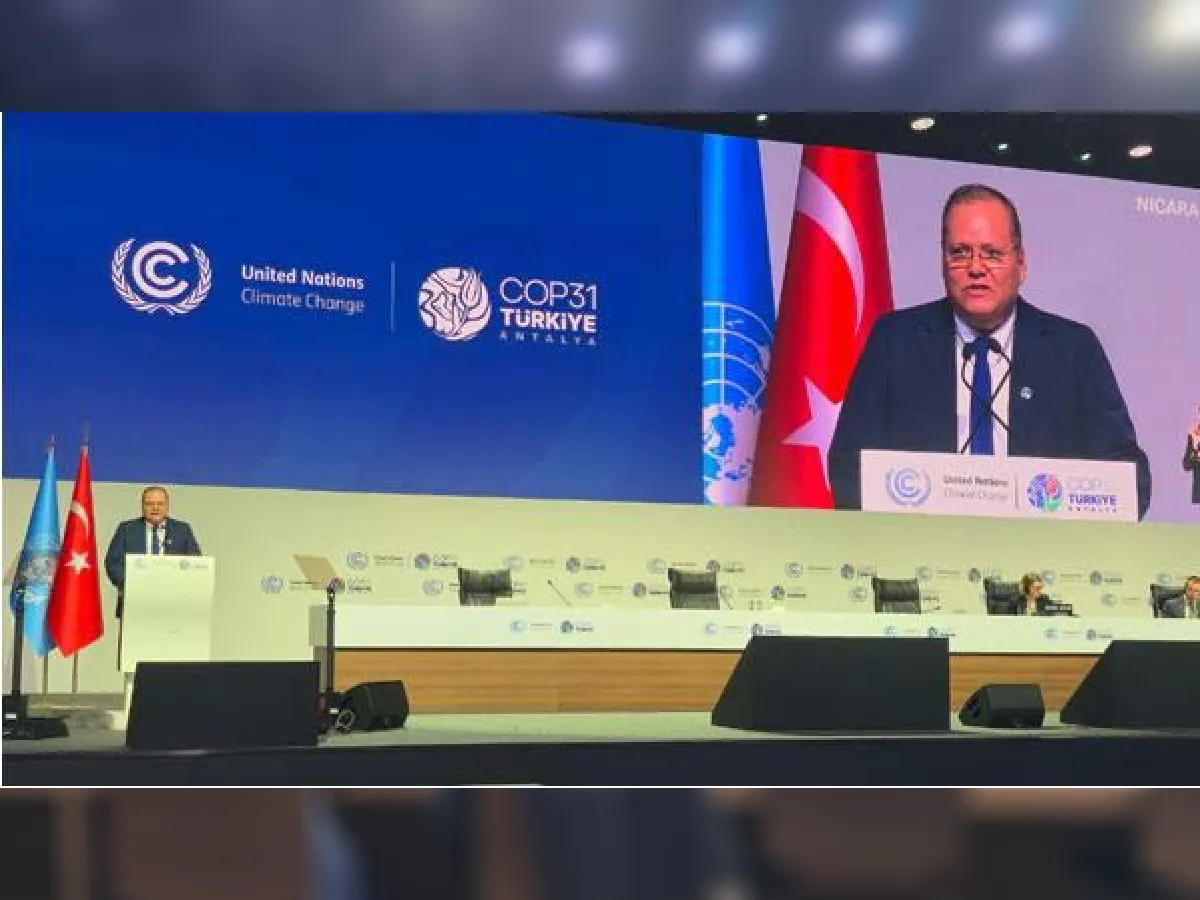
NATIONAL DECLARATION OF NICARAGUA
Thank you very much, Mr. President.
Your Excellency ministers, vice-ministers, heads of delegation, delegates, brothers and sisters:
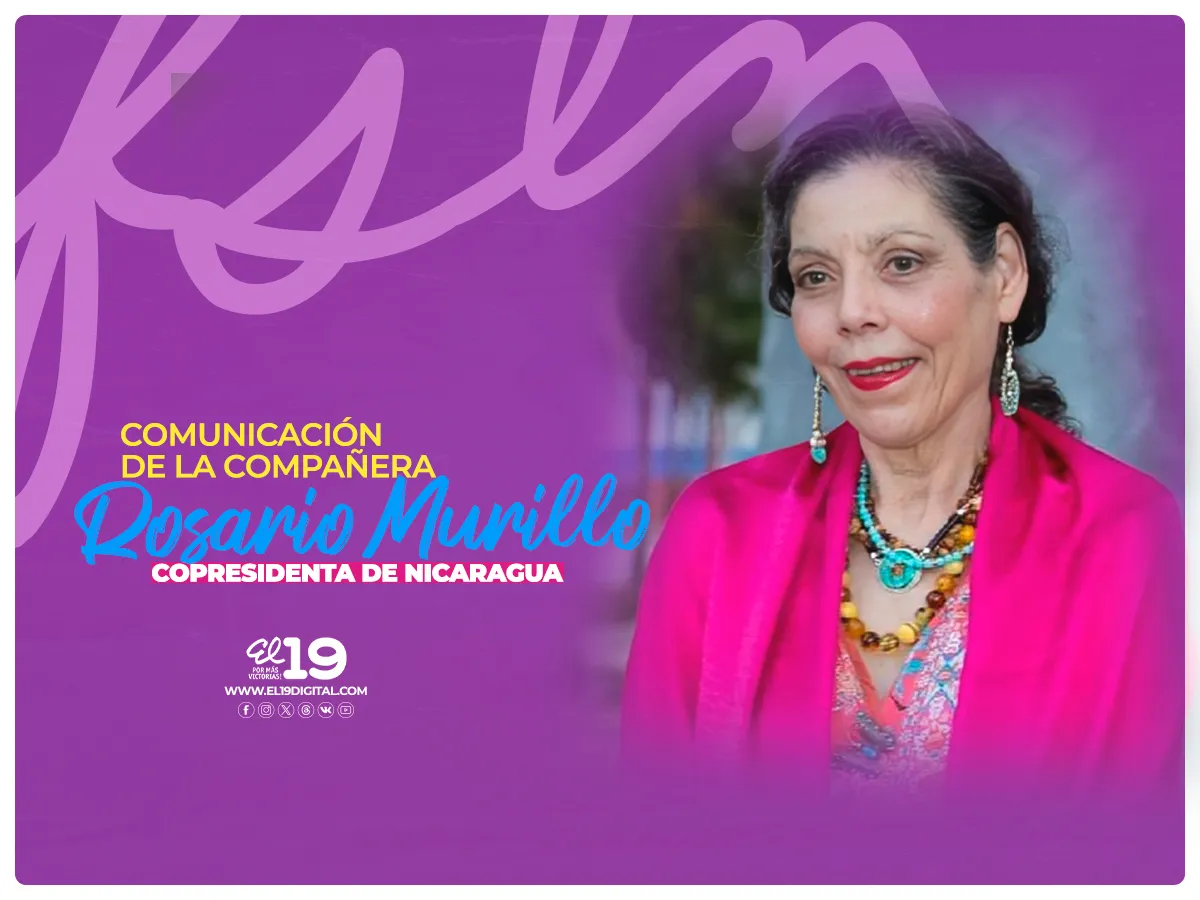
Our delegation has the honor to convey fraternal greetings from our Co-Presidents, Comandante Daniel Ortega Saavedra and Compañera Rosario Murillo Zambrana, to the distinguished delegations present and, especially, to the people and Government of the Republic of Turkiye for their hospitality in Antalya.
Mr. President:
As our Co-President, Compañera Rosario Murillo Zambrana, has pointed out: “What they call climate change is no longer what it is, it is the destroyed earth, it is Mother Earth that we have stripped of its protective, natural elements; the looting, the eagerness to take everything in exchange for nothing and leave the consequences to us all, that is what generates these phenomena and what we call climate change.”
For our country, tackling climate change is part of the fight against poverty and our commitment to the well-being of Nicaragua’s families. Every harvest we manage to protect, every community which receives electricity and every effort to protect our water and our forests have a purpose: “to ensure better living conditions for our people.”
Mr President, Nicaragua contributes with concrete actions to environmental and climate management:
We have transformed the electricity sector, expanding families' access to energy and reducing dependence on fossil fuels. With this, we avoid the emission of 2 million tons of carbon dioxide (CO₂). In 2006, only 54 percent of the country had electricity and 74 percent of the generation came from fossil sources. Today, electricity coverage exceeds 99 percent and, as of August 2026, renewable sources represented 69 percent of our generating capacity.
In rural areas, adaptation to climate change begins by addressing the decisions farming families must make with each agricultural cycle: what to sow, when to do so and which variety to use. We are linking meteorological information with technical support to guide these decisions according to the expected rains, the soil characteristics and the water needs of each crop.
As regards our natural patrimony, Nicaragua has approximately 5 million hectares of forests and is home to 8 percent of global biological diversity. This natural heritage is fundamental to protect our water sources, to conserve biodiversity and to address climate change. According to the UN Global Forest Assessment, our country has significant reduced deforestation and forest degradation.
With the National Reforestation Campaign “Verde que te Quiero Verde", we plant 10 million trees a year. Families, youth, municipal governments and institutions all participate in this effort to recover degraded areas and protect our forests.
Mr. President:
We carry out these efforts despite the fact that our carbon dioxide (CO₂) emissions represent only 0.05% of the global total: “Nicaragua emits 28 million tons, compared to the 59 billion tons emitted in the world.” However, we face intense and frequent natural phenomena.
In 2020, Hurricanes Eta and Iota caused an estimated US$993 million in damage, equivalent to 8 percent of gross domestic product. They affected our families' homes, their crops, the roads and the services they need every day. Rebuilding requires resources that are also necessary to continue fighting poverty.
That is why Nicaragua is steadfast in demanding “climate justice and reparation” and respect for the principle of “common but differentiated responsibilities and respective capabilities.” The countries of the "Global North" must take the responsibility that corresponds to them for their historical emissions, reduce their emissions and fulfill their financing commitments with the countries of the “Global South".
Mr. President:
At this COP31, Nicaragua recognizes the work of youth, families, indigenous and Afro-descendant peoples and rural communities for climate justice. Their participation is essential to face climate change. Their knowledge, transmitted from generation to generation, and their daily work caring for land, water and biodiversity are indispensable to sustain these efforts.
Nicaragua hopes that, at this COP31, commitments for Climate Justice will emerge, as well as an indispensable Reparations Policy, converted into direct and unconditional cooperation for the benefit of our Peoples.
The emitters and those responsible for depredation, degradation and ecological instability must recognize our losses and contribute to recovery, to the extent of their responsibilities, so as to restore the right to life of Mother Earth and the Peoples of the World.
Thank you very much, Mr. President.