Meeting with Medium, Small and Micro Businesses
and Creative and Innovative Entrepreneurs
during the Consultation Process of the Constitutional Reforms
Tuesday, August 11th 2026
Address by Dr. Gustavo Porras:
Good morning, Compañeros and Compañeras.
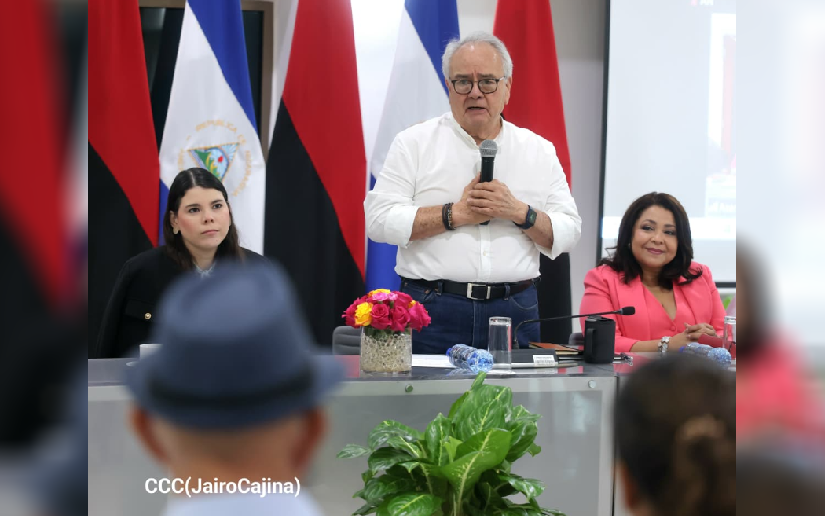
Today it’s up to us to resume our Consultation Process and we are doing so with a very important sector, a sector that has been developing and is one of the sectors that contributes most to sustain the economy in our country, I am referring to Medium, Small and Micro Businesses and the Creative and Innovative Entrepreneurs. We have with us, presiding here, Compañera Camila Ortega Murillo, who is the General Coordinator of the National Commission for the Creative Economy. Welcome, Camila.
There is also the Compañera Sonia Porras Green, Assistant Secretary for the Creative and Orange Economy of the Presidency. Compañero Luis Morales, Secretary of the Creative and Innovative Entrepreneurial Economy of the Presidency and Compañera Frania Peralta, General Secretary of the Ministry for the Promotion of Entrepreneurship.
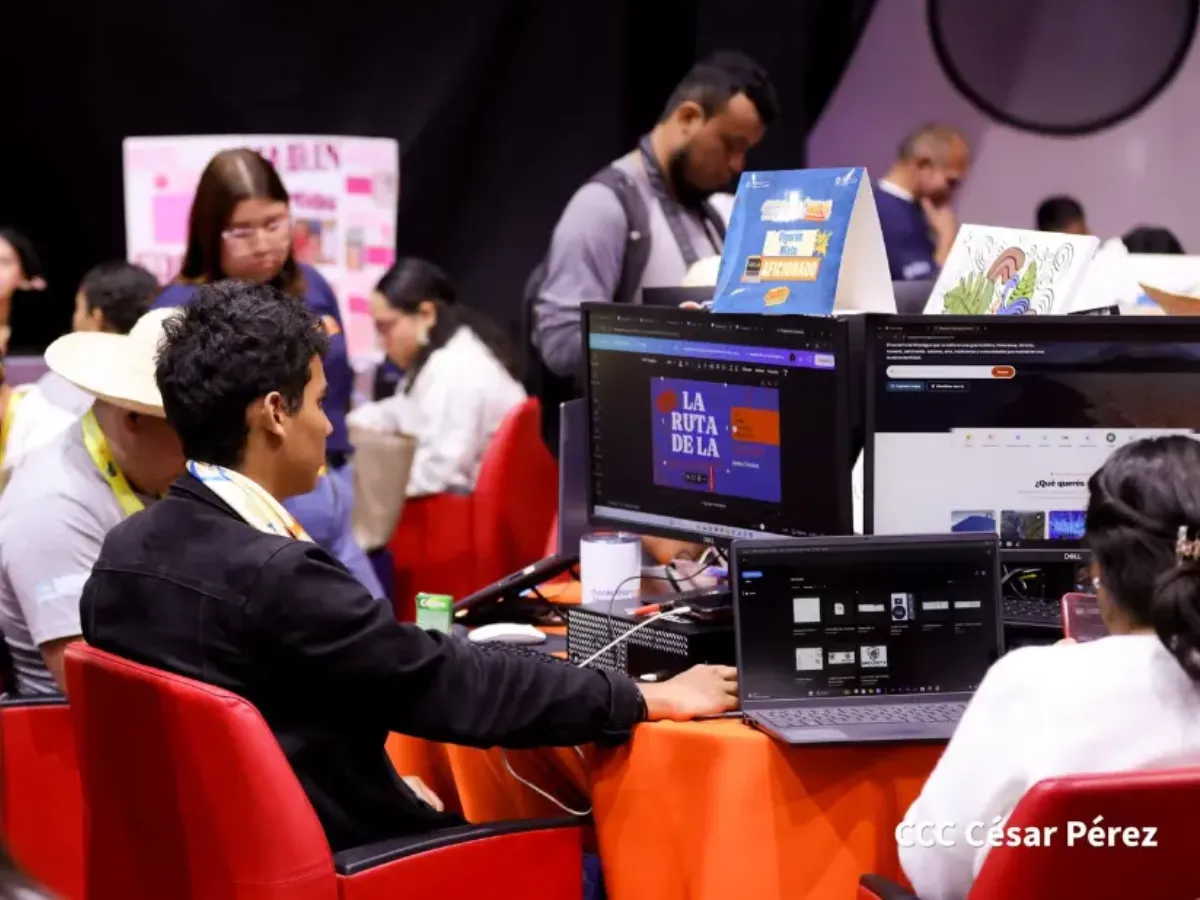
With us here in this meeting too are Compañeras and Compañeros from the Ministry for the Promotion of Entrepreneurship, Compañeras and Compañeros from the Secretariat of the Creative, Innovative and Entrepreneurial Economy. The Compañeros and Compañeras of Design Nicaragua, from the Creative School and also Entrepreneurs. We welcome you all.
For our part, we have the Economic Commission of the Assembly here, which is very relevant to you. This commission is chaired by a member of the Special Constitutional Commission, Compañero Wálmaro Gutiérrez, who is with us here. We also have Compañera Auxiliadora Martínez, who is the president of the Justice Commission.
Let me present the members of the Special Constitutional Commission. We have our friend Mario Asensio, who is the Head of the IDB Political Grouping, the Democratic Independent Political Grouping. Our friend Lester Flores, who is the Head of the PLC Political Grouping and too Compañero Brother Edwin Castro, who is the Head of the Sandinista Front Political Grouping.
The other members of the Commission are the members of the Executive Board of the National Assembly. We have Dr. Arling Alonso, who is the First Vice-President of the National Assembly. Our Heroine Amadita Pineda, who is Second Vice President of the National Assembly and we have our friend Maria Haydee Osuna, President of the PLC and Third Vice President of the National Assembly. Here too, we have educator Loria Dixon Brautigam, who is the First Secretary of the Assembly.
Then we have Doctor Wilfredo Navarro, who is Second Secretary of the National Assembly and our friend Alejandro Mejía Ferretti, who is the Third Secretary. This is how we have made up the Special Constitutional Commission.
Without further ado, I am going to present the information we have for you about the Proposed Constitutional Reform. As of July 19th, Comandante Daniel gave a clear orientation: There can no longer be elections here that allow the bandits who are lying in wait to return to seize the Government, seize power and roll back the conquests of the People. That is, in essence, in other words, what he has mandated us for.
And then he said: "We are going to work with the National Assembly on the laws that are necessary to guarantee that those who are lying in wait will not be able to, will not be able to, will not be able to." Given this guidance from Comandante Daniel and Compañera Rosario, we straightaway set to work and began to identify those things we needed to put into the Constitution so that there could be no possibility of reversing these important changes.
Because the Constitution is what defines matters, it is the Fundamental Law, it is the one that gives its seal to the characteristics of a country, of a Republic. So, in our Constitution, the message, the direction given by Comandante Daniel and Compañera Rosario must be made clear.
The first thing was to identify those people lying in wait, where those people lying in wait are, together with the history we Nicaraguans have, such that we must look for ways to ensure they don't return, that's the first thing. And we began to dig into history, a history by the way, that our leaders, our guides always repeat it to us permanently. Comandante Daniel, in every speech, repeats this history because we cannot afford to forget it. If we forget that history, history will repeat itself and it cannot be allowed to repeat itself again. We have to make sure every day, step by step, that we bury it for good. Compañera Rosario, in all her speeches, talks about that history and talks about how to strengthen the struggle for Dignity, Independence, Sovereignty and Self-determination.
So, it is very easy to remember how our history was born since we all studied the struggle of Diriangén and the struggle of Nicarao, our anti-imperialist Indigenous Heroes. But why do we study their struggles? What they taught us or what they tried always to teach us was the same thing: Diriangén and Nicarao fought against the Spanish conquistadors and they told us that they were bearded men who came on horses and we regarded them as demigods.
But what is the background analysis? The basic analysis, straightforwardly and simply, was the colonialism of an empire, which was the Spanish empire, which was in crisis, which needed, like every empire, to get wealth from somewhere else to sustain what we call the metropolis, to sustain the center of the empire, and thus they had to look for where to conquer. And so the Spaniards came, to do what? To dominate us with weapons, to dominate us with ideas, to dominate us with beliefs, to take away our own thoughts, our own religion, our own customs, to impose customs on us, to impose language on us. The whole process of colonization that has taken place in many parts of the world, in Latin America and in other parts of the world.
What happens is that each People assimilates, adapts and draws on new strengths. This is the case of that great miscegenation that we Latin Americans have today and, above all, that indigenous force of Nicaraguan miscegenation. We saw this in these days, during the festivities of Santo Domingo. That is, they wanted to impose a culture on us but what came out of that was our Nicaraguan culture. Our Santo Domingo came out, not their Santo Domingo.
Such a process is, we can say, so strong that we may come to think that such stories cannot be repeated again. That process lasted 300 years and in those 300 years we went from 1500 to 1821, which was the year of Independence in Central America. In those 300 years, how many Heroes? How Many Combatants? How many Chieftains? We heard of a few that are mentioned, we are rescuing their history, talking about Adiact, about Agateyte. That is, so many heroes who fought for the dignity of this People.
Up until the signing, which was a pure formality, of the independence of Central America in 1821, and which didn't stay that way. That is to say, because they wanted to continue dominating us, they divided us, such that it was no longer a united Central America, although we were Central American countries, as federated States. Nicaragua appeared in the Central American Federation as a Republic. But although the empire fell or rather the empires fell, because Nicaragua, whether by fortune or misfortune, was fighting against the Spanish empire but also fighting against the British empire in the Caribbean.
In other words, we speak Spanish in the Pacific and English is spoken in the Caribbean because that is the expression of the domination of empires. But the most important thing is that we developed and built our own language. Now, what are we talking about, what is it? Nicaraguan, because we have developed our own language. So much so that one of our national Heroes and Universal Poet Rubén Darío demonstrated it, through modernism, by transforming Spanish with all the form and strength of our language.
We have to take all that into account here. What does that have to do with the matter in hand? It has to do with it because the first objective of this proposal is to rescue Nicaraguan Dignity, that's the first thing. That is to say, on that point I can be very clear, all of us can be sure that this proposal will certainly say that any choice we make must be made without foreign interference, that any choice we make must be that of Nicaraguans, to elect Nicaraguan authorities for the interest of Nicaraguans and cannot be influenced from outside. That is a concept we must make clear in this Constitutional Reform.
Before moving on to that, there are three words that we offer as a general guide to this Constitutional Reform, which are Stability, Security and Peace, those three words are all intertwined, they are interdependent, they are interlinked. That is to say, without Security there is no Peace; without Peace there is no Security and Stability, and without Stability there is no Security and there is no Peace.
These are three words that we need to make clear. Why? Because we have one goal, to preserve Peace, to have Security and Stability to defeat poverty, which is the central guide of all the Nicaraguan people. We have to overcome poverty and that is the importance of this meeting and of this sector. It is a sector that will give us the necessary contributions to advance in the fight against poverty, that is the concept.
Returning to the historical perspective, here are two examples of how elections were handled in our country in the past. Here we are already at 1923, but what happened before 1923? Well, before 1923 the Liberal Revolution came, our National Hero José Santos Zelaya dismembered, destroyed, disarmed the scaffolding of conservative domination, which was basically the Church, when there were no civil rights here.
To marry you had to be follow the doctrine of the Catholic Church, to be buried as well. Maybe older people can remember, how before they didn't ask for our identity card, nor did they ask for our birth certificate, what they were asked for was proof of our baptismal faith. Remember there were institutions that said, "Go and bring proof of baptism," that is, to prove you were baptized. That was the proof you existed: If you weren't baptized, you weren't a citizen. You had to prove that you had been baptized, why? Because it was a different kind of domination.
There were no civil rights but all that was changed by the Liberal Revolution, and it also changed the backward ideas of the Conservative Treasury policy and sought to get ahead by working on the same thing that the filibusters had already seen when they came here looking for the passage of a Canal from ocean to ocean. The Yankees began working on the Panama Canal in the late 1890s and early 1900s.
In the same way, Zelaya worked on a Canal through Nicaragua, because it was something too that the Spanish colonizers had thought of doing there via the Isthmus of Rivas, ever since they navigated the River San Juan. But when Zelaya wanted to democratize investment in the canal, when he talked to the Germans and talked to the Japanese, the Yankees came and said "stop that" and emitted the notorious Knox Note, which is what we heard, what we learned about, but without knowing the full background because we were only shown the outside. The background was that... and all that they told us about was the "Knox Note”, which is like talking about a Rubio Note today, because Knox was then the US Secretary of State.
This Philander Knox sent a note to Zelaya and said, "Sir, leave the government," as well as sending some gunboats to intimidate him. And so they took out Zelaya, but that's where the Nicaraguan spirit came in, Zeledón. Benjamín Zeledón fought against the Yankee intervention in 1912, so the Yankees, along with the Conservatives, assassinated him. The story of struggle goes on, and that is its expression.
Every time we make these presentations, people say to us: "Why do you dwell so long on that?" It’s because we must be clear that what we are doing is a historical continuity of this process of struggle in which we have been engaged. Why are we so successful in entrepreneurship, innovation and the commercial development of small businesses? Because that's our story. That’s how we Nicaraguans are, entrepreneurial, dynamic, merchants, always alert to opportunities. But that mass activity, when you include thousands of thousands of Compañeros and Compañeras, gets transformed into growth of the Gross Domestic Product. It is the fight against Poverty.
So, what do I want to say after remembering Zeledón? Remember the story that we already know: Sandino saw how Zeledón was dragged through the streets by the Yankees in Catarina. Sandino strengthens, develops and decides his combative position on seeing that. What the Yankees wanted was to scare us and what resulted in the Nicaraguan people was a reaction of Dignity. How could anyone believe a Yankee will come and abuse one of our Heroes and that this would scare the people?
And this is how the US intervention continued. In 1923, the Yankees decided that this country should be in their image and likeness and since they have a bipartisan system there, they sent a man named Harold Dodds, who was hired by the United States Department of State and sent him to Adolfo Díaz, who was the President, to hire him to draft Nicaragua's Electoral Law.
In 1923, the Dodds Act was enacted, an Electoral Law where what they wanted was to institutionalize the bipartisan system. That's where the bipartisan system is born, which is Liberal-Conservative, because the image of the Yankees is these two parties who serve the interests of the empire, who alternate, just like them, sometimes the Conservatives, sometimes the Liberals. Historical parallels, they told us, that was the reality. The historical parallels were an invention, a framework of the US intervention, that was in the 1923.
This image is an example of the official ballot paper of November 6th 1932. This is how the ballot papers were with the Conservative Party and the Nationalist Liberal Party and look at the candidates and both of them to be regarded with concern, if not terror, or rather, doing the sign of the Cross at both of them, so they can't say we’re afraid of them. The candidate for president of the Conservatives was Adolfo Díaz, the one who had invited in the Yankees years before. The candidate of the Liberal Party in 1932 was Juan Bautista Sacasa, the one who two years later invited Sandino to that last supper where they had him assassinated. This was the reality of our country, a reality that cannot come back.
After 1923, what other important event happened? In 1927 there was the Espino Negro Pact, that is, the pact where the Yankees, Henry Stimson forced Moncada to surrender his weapons. And there was only one of all the Generals of that Constitutionalist Army, who said, "I’m neither selling out nor will I surrender" who was General Sandino, and he left with 30 men to fight and issued tne Manifesto of San Albino, on the first of July. That took place on May 4th, which we commemorate as the Day of National Dignity, because it is the Dignity of Sandino against the surrender of Moncada.
In that surrender, the Yankees agreed, in exchange for that surrender, to make Moncada President and so that's what they prepared in 1928, the year after the Espino Negro Pact. And if you look back, in 1928 the US Marines come, US officers become presidents of the electoral districts. I mean, it's like, at the polling station where we usually go, the one who was in charge and the one who let people in or not, the one who tells you to leave, was a Yankee dressed as a military marine, that's what took place.
In addition to that, they appointed as president of the National Council of Elections a Brigadier, General Frank Ross McCoy. So, they appoint a Yankee general to be president of what we know today as the Supreme Electoral Council, and that reality can't come back. We have to make this clear in the Constitution, that in the elections of Nicaraguans, no one from abroad has any role to play. Because our choices are dignified and this is the center, the very soul of every aspect of the reform.
What was their goal? Their goal was to make the traitor Moncada President, so as to guarantee US dominance. Here we have a sample of what the Official Gazette of April 3rd 1923, of the Dodds Law was. So, the Yankees made sure that what it says was done, but the structural part of the law says how the elections should be, the law says how the electoral districts are going to be. But immediately, to give an idea of how they rigged matters, once they organized the elections like this, then already in 1928 what they did was to suspend that law and create a decree, which is the one that prevailed. But before that, I want to make sure that when they talk to us about elections, we know what things they are talking about to us.
This was 100 years ago, but that's how they defined things: The right to vote belongs only to Nicaraguan men, that is, women didn't vote here. In other words, to get to this point where our Co-Presidents have been promoting the principle of 50-50, when they have been promoting equitable gender practice by law, such that the total practical involvement of women is greater. Above all, they have encouraged women to lead this country including at the level of the Presidency, 50-50. This means that anything not in that direction is to regress. We come from this reality of not so long ago, since 100 years in historical terms is not very long.
So, look at what Dodds Act says. If it is only Nicaraguan males who can vote, that means that out of every 100 voters who should have had the right to vote, 48 are those who have the real right by law. Why? Because 48% of Nicaraguans are men, women are 52%. Thus, only 48 out of 100 vote, the rest do not. But then the Act says: as long as they are 21 years of age or older. At that time, more than 60%, I would say, were under the age of 20, so that's how the rules make it such that out of 100 people, only 20 have the right to vote. However those between 18 and 21 have the right to vote, those who can read and write or who are married by the Church.
But remember how high the illiteracy rate was... Who then could read and write? Only the children of the employers. So, there they were guaranteeing themselves a voting quota that was absolutely limited to their families. Who got married in the church? Only those who had money. So, everything was designed to dominate the Nicaraguan people, to dominate us, that was the design. So, they may well talk to us about democracy, but we have to learn where we came from so none of all that can happen again. And they tell you "But that’s freedom” which is a pure lie.
If you look at photos of the voting process of that time, what you see are some men in suits and bowler hats, all very elegant and with several people, men dressed in white, they are the canvas work shirts they used and those were the workers. So, the employer there with his employees who were going to vote, imagine that a worker was going to vote differently from what the boss was telling him, there was no way. That is, the whole design of the elections was one of domination.
But even that was not enough for them, since they suspended that law and issued a decree which is the clear expression of ignominy, of domination, of what must never happen again in this country. Look at how the decree began:
“The President of the Republic, in view of the fact that the Supreme Court of Justice, by agreement on the 17th of this month, has appointed in place of Señor Joaquín Gómez who submitted his resignation, appoints General Frank Ross McCoy, President of the National Elections Council, and that this high official in that capacity and having been appointed by the President of the United States, must direct the 1928 election of supreme authorities as agreed so as to put an end to the civil war raging in Nicaragua.
In a few words, what it says is that so-and-so resigned and we are going to appoint the Yankee General McCoy, who, in turn, is the person indicated by the President of the United States, who is going to be in charge of ensuring that Moncada becomes President. That's it, it is all of a piece with what we were just looking at and this is what must never come back.
So we continue in our struggle and we continue to fight, this model was maintained for us from 1928 to 1978, that is, for 50 years. In 1979 the Revolution came, which is what destroyed this model. Then they tried to get it to come back, but they couldn't prevail and they won't be able to!
That is the model which we are steadily destroying every day, because we take away the model of the employers and subordinates, the model of Yankee domination and we move to the Sandinista model, the Sandino model, the model of the People President, which is an updating of the Sandinista model. This is the idea expressed in our times through the commitment and mandate of Comandante Daniel and Compañera Rosario: Let's build the model of the People President and this is the model we are working on.
In this model, we arrived in 2025 at a Reform which brought up to date the 1987 Constitution, which is the Constitution of the Revolution, and we worked on its Article One, of course now with experience, because we could do so calmly, we have been working, growing, but we do not forget the writing of Rubén Darío, a prose that is called "From the North", which clearly says: they will talk to you but always they have the dagger, the dagger in their hand and they have it at your throat.
We have advanced, in dialogue, alliance, consensus, working, we have grown and consolidated the model little by little. Because the model is consolidated even in the way we think, even in the way we speak. Who today is going to talk about “beneficiaries"? Or "Oh, I'm going to offer you the benefit of a project” No, today we are protagonists because the model is the People President, the People are protagonists. So, we are changing concepts and we have to have guidance as we develop all those new thoughts, ways of speaking, of acting. So, that's what we're developing.
Who can now say anything against women's participation in a way that contradicts what we are doing? No one. If anyone says that, it means they don’t feel the importance of that process.
Who can speak with contempt of humility, for example? The day that someone speaks with contempt of humility, first they cease to be humble, a quality that self-destructs in anyone who doesn’t value it or mentions with contempt. So, we are building a new way of thinking and this Article One sums it up.
"Independence, Sovereignty, National Self-determination, Security and Peace are inalienable rights of the People and foundations of the Nicaraguan Nation. Any foreign interference in the internal affairs of Nicaragua or any attempt to undermine those rights threatens the life of the People. It is the duty of all Nicaraguans to preserve and defend these rights."
And now with the experience of the struggle against the coup promoters, now with the experience of the conviction that they could not prevail, nor will they. Consequently, anyone who violates these sacred rights of the Nicaraguan people will be considered traitors to the Nation. That is Article One of our Constitution.
It is an Article we should keep very much in mind since it opens up for us all the other Fundamental Principles. So, from there, if one talks to our people, to any Nicaraguan, and ask them if they felt good when they were held up at roadblocks, when they stranded by the roadblocks, they're going to tell you no, they don't want that to come back. So, you ask them: and those responsible for doing all that, do you want them to participate in politics? Do you want them to be candidates? Clearly no one is going to want them to...
Now, our people remember all that and say: "That person was a coup monger, that person ran a roadblock." And why is that? Why does that stay with them? Well, what you have to do is to acknowledge the feelings the People explain to you and you have to include that, because we are building our Nicaraguan identity and it must be recognized. For years now, our Dignity has been recognized.
Independence, Sovereignty, National Self-determination, Security and Peace, and also now it is recognized that anyone who acts against these rights is a traitor to the Nation. A traitor to the Patriotic Nation cannot, simply cannot participate in the political life of our country. So, that's where these ideas come from among everyone we consult.
Thus far is the main part, let's say, and this gives rise to six ideas. The first is “They won't be able to.” As Comandante Daniel told us on the 19th: "They won't be able to, they won't be able to, they won't be able to.”
So, from there we arrive at the idea that this is the first concept that we should include for the Reform. "They won't be able to." That is, citizens have the right to elect and be elected and to run for public office, except for the limitations provided for in the Political Constitution or in this Constitution.
That is the forty-seventh Article of the Constitution. And so, the coup plotters cannot be candidates for positions of popular election nor will they be able to hold public positions by appointment of the Presidency of the Republic or election of the National Assembly, which is what we have been talking about. They won't be able to.
Those who commit or have committed acts that undermine Independence, Sovereignty, National Self-Determination, Security and Peace, as traitors to the Nation cannot take part nor those who violate or have violated the Fundamental Principles contemplated in this Political Constitution. That's the first concept. "They won't be able to."
And to all the Brothers and Sisters who are with us on line please remember: "They won't be able to, they won't be able to." They have no right, they have lost their right. In other words, they are no longer Nicaraguans, they will not be able to take part.
That's the first concept. And, to make even clearer that concept which encompasses things that are mortal sins in the history of our country's struggle. For example, those who commit or have committed acts that undermine Independence, Sovereignty, National Self-determination, Security and Peace may not take part and here comes a list of offenses.
Those who incite or promote foreign interference.
That is to say, someone could easily come here and put you up as a candidate, usually from outside, well, perhaps not usually, but anyway they could propose: "We’re asking them to intervene and that they take out the government." After proposing that, such a person is not going to be a candidate for anything, even to participate in politics. That is, they are playing at something else, not engaging in the civic political life of the country.
Those who ask for military intervention will not be able to. Those who are organized with financing from abroad. We already know, any party whose only strength comes from outside the country cannot take part.
Those who propose, manage or support economic, commercial or financial blockades. And those who propose, manage or support sanctions against the State of Nicaragua, its institutions and its citizens. That is a strong provision.
So, that's the first idea, "They won't be able to." The second idea is Stability. We need to establish a period of time that gives us Stability.
The election is a process of the People, whereby the People express their satisfaction with the way, the necessary form of government periodically.
You see, we still need a period that gives us time to develop medium-term projects and projects that go into the long term, a period giving you time to sense whether today you are doing better than yesterday. That is, most of the surveys answer us positively that people feel they are enjoying tranquility and Peace.
If I close my eyes and go back 19 years. I mean, we'd be in the dark in this room. The street outside would be and indeed was awful. You can all tell me, Compañeros and Compañeras who are connected on line, everyone can tell me whether it is true or not. Or if the roads back then were not ruined, the locals who are watching me, and if there are local people here, remember how long it took to travel from Nejapa to León. Three hours, not because of the distance, but because the road was destroyed. Or how long did it take from Managua, if you had to go to Muy Muy, Matiguás or Río Blanco?.
Or ask if you could go smoothly by road to the Northern Caribbean. Or if you could go to the Southern Caribbean. Or if you could drive over the River Wawa? You could only do so by swimming across or by boat. In other words, these are realities. Now in Nueva Guinea you have a modern hospital, or you go to Bilwi and you have a modern hospital, or to Bluefields and you know a new hospital is being built there.
Those are realities. These are realities of which we are proud, or you have electricity coverage in 99.5 percent of the national territory. We didn't have that before.
So I ask you, Compañeros and Compañeras who are connected on line, everyone. No, no, no, we have forgotten those times which were not that long ago. Well, really, in the life of a country and a people, 18, 19 years is not a long time.
We've forgotten how the kids were taken out of school if they couldn't pay, or how they weren't given their examination grades if they didn't pay, or how children fainted because they hadn't eaten and there was no school meal, or the roll of unaffordable prescriptions that people were given in hospitals, or the 10 pesos you had to give in order to get a number to be able to receive medical attention. In other words, Nicaraguans have countless examples of how the transformation process has gone. So then we say, and the Comandante and the Compañera say, "Well, ensure enough time, seven years for people to appreciate. Let’s see every seven years how we are going, whether we are going well, going onward and, in addition, to evaluate and look at all the factors, including the criticisms like everyone else."
This is called Stability. So, the proposal here is that the electoral periods should be seven years, that the positions of popular election should be seven years, that the appointments made by the President and ratified or elected by the Assembly should be seven years. So how are they going to remember this? This one is easier to remember than seven years, but...... they are going to agree on the concept of Stability, so then, let's say, as well as They Will Not Be Able To and Stability we also need the concept, the idea of Cohesion and Security. That means that those seven years apply not only to elected positions, but will also be valid for the Head, Commander-in-Chief of the Military Forces of the Army and for the Heads of the Police Forces. Seven years.
So, that's why we now consider the principle of Cohesion and Security. The seven years of the high commands, both of the Army and of the Police. Next, here is the concept Guarantee of our Electoral Democracy. That is another idea that we must not forget. Now with this one we have four ideas. They won't be able to. The other idea is Stability. And the other idea is Cohesion.
And now, Guarantee of Electoral Democracy. And we called it Electoral Democracy because democracy for us is not as if anyone’s saying: "Oh, we don’t need elections to have democracy in Nicaragua." Yes, this is electoral democracy, although democracy for us is everything I have mentioned.
We have democratized access to health care, we have democratized access to education... Imagine if we had those roads that we now have and I put a booth requiring you to pay a toll. Is that democracy? And only those who can afford to pay can drive on. Everyone else can take a hike. That is the democracy they want to sell us. No, our Democracy is for that road to be made for everyone to drive on.
And since the Yutong buses are also appearing everywhere, the mini-buses, they democratize transportation, because, well, they don't ask for proof of income before you can get on them. In other words, democracy is a broader concept than just elections, but we do give them their place. And what does this mean? That we give the attributions to the Supreme Electoral Council to be able to fulfill what we are saying.
In other words, the Supreme Council has to hold these elections every seven years. The Supreme Council has to apply the principle "They will not be able to". That is to say, if a political party appears which the Supreme Council realizes is financed anomalously by foreigners or by some outside force, it stops that party and it is not given legal personality and that's it.
If the Council sees that in a political party any of the directors is someone who has undermined Independence, Sovereignty or has foreign financing also, then it takes away, it removes the legal personality. That is to say, this Article, which is Article 152, is the one that gives the attributions to the Supreme Electoral Council. So next, this is the fifth idea.
We named it PAX and we called it PAX after Rubén Darío's poem called PAX. Peace, a beautiful poem, it has a very beautiful stanza. And, in honor of Rubén Darío, who was born on January 18th, we will change the Constitution and change the date of the inauguration. That is to say, let it now be not the 10th of January, but the 18th of January. On January 18th, in honor of the birth of Rubén Darío.
There are two Articles that need to changed, because Article 123 is the one relating to January 18th and Article 130 is that the National Assembly and the Deputies are installed a day earlier. So, there it will say it's the 17th. So we don’t forget that one anymore. And, finally...
There’s an idea called Coherence. Why? Because I will have explained all this and someone might say: "So it's seven years now and all that has been approved. But what will happen to those who were elected in the last elections? Won’t there be a vacuum?"
No, we are going to do the same as in the previous Reform, that is, everything is going to be adjusted, an adjustment is made which is legal. That is so because reality has to be consistent with what is going to be determined by the Constitution. Nothing in the country can be outside the constitutional order.
That's the idea, ensuring that everything is addressed. This has to be adapted to the new constitutional mandate of seven years, what exists and what is proposed here. The terms of the authority elected by popular vote in the last general, municipal and regional elections currently in force are extended to seven years from the date of that last election.
All that is now adjusted. The term of the positions appointed by the Presidency of the Republic or their election or ratification by the Assembly is extended to seven years, starting from the date of the appointment, election or ratification. In other words, the term is extended to seven years, to seven years from when? Since their appointment.
The appointment is not related to the date of the elections, it is related to the appointment. So that, as regards the most recent appointment, I always give the example of the Compañera Sara Amelia Rosales, who was elected here in the Assembly as Superintendant of the Banks about a month ago. So, the seven years runs from that date. The same for other elected posts.
And finally, so that there is no doubt, all current national legislation to do with the civil service, where the period of duties is stipulated or regulated, will be understood as fully reformed and will read that the period for any post will be seven years, that is, so that there is no... and on that, there we can complete that in detail later.
The Compañeros and Compañeras have a list here with all the positions that are affected by this provision. There we have the Judges of the Supreme Court, the Supreme Electoral Council, the Procurators, the President of the Central Bank, the Comptroller's Office, and so on.
It is the State. But the important thing here, let's not forget, is that there are six ideas that we want to include. Let’s hope all of us who are connected here and those who are present support us.
In this Constitutional Reform, a Partial Reform to the Constitution, we have six ideas that we cannot forget so perhaps we should repeat them and we repeat the names of these ideas. One, "They won't be able to." We know very well who are the ones who won't be able to.
Two, Stability. We already know, it's the seven-year period.
Three, Cohesion and Security. Since those seven years are also about the army and the police.
Fourthly, the Guarantee of Elections, of Electoral Democracy, that is, the electoral part, which is the guarantee of the Supreme Council. Then, so it has the attributes to guarantee compliance.
Idea number five. Let's not forget about Dario. Dario teaches us PAX. such that January 18th is going to be the Inauguration.
And sixth, everything must be adapted to the Reform, which is Coherence, that is, everything current right now will take seven years so that everything will have the same period. That’s it. Thank you.
I give the floor to the Compañera Camila to manage any comments.
Compañera Camila Ortega
General Coordinator of the National Commission
of Creative Economy:
Thank you, Doctor. An excellent explanation, I think we are clear and reaffirm our coherence on the part of all the Productive and Entrepreneurial Sectors of our country, supporting this great initiative.
We want to give the floor to some Compañeros and Compañeras from the Enterpreneur, Creative Economy who want to join in and share their thoughts. So, if you Compañeros and Compañeras let us know if you want to intervene today, we can have two or three interventions.
Compañero Pedro Pablo Martínez:
Good morning. Greetings to our National Assembly, that this is a positive effort, tenacious work, which vindicates our population and gives us Security, which is a constant struggle, as our Compañero Dr. Porras already said. I believe that we are fulfilling the People’s needs, in any case, with these actions, giving Security to our Nation and in practice raising the banner of Dignity of our General of Free Men and Women, Augusto César Sandino.
This comes rather to give us, as a People, love for our Patriotic Nation. Our Sandinista Front has come, thanks to the leadership of our Comandante Daniel and our Compañera Rosario, to provide the basis for Security in our Nation and the sharing of this initiative makes me proud as a citizen, as a singer-songwriter, as a musician, as an artist, because it will give us the Freedom we need to continue developing our country, our Nation.
And giving an example not only to Nicaraguans, giving an example to other Nations fighting for their Dignity, for their Freedom, for their Self-determination. The Sandinista Front is an example, our Party, our country is an example for future generations and an example for other Nations that follow the constant struggle.
Thank you, Compañeros and Compañeras.
Compañero Manuel Baltodano:
A very good morning. My name is Manuel Baltodano, I am the owner of the company Casa Alimentos. We and I personally, am very grateful for this great opportunity and, on behalf of all Entrepreneurs, we thank, give our commitment, our acceptance and support to these Reforms.
Every day for us who work for our businesses, I think that these Reforms are going to contribute a lot, because we can project ourselves, we can project ourselves to have more Stability, to be able to plan our investments for the future and have that Security of being able to guarantee our results. With these Reforms, we as Entrepreneurs, without a doubt, have that guarantee and can contribute to generating new jobs, contribute to our country, already with the Peace that our Government offers us and ensure making our economy more dynamic, which is very important.
In this sense, we as Entrepreneurs are always anxious to innovate, always anxious to generate activity and, with this type of policy, we feel very supported, having the guarantee to be able to continue working and to be part of the Peace this country has, to feel part of the Constitution and to continue working for our family and for our country in Prosperity and in Victory.
Thank you very much.
Compañera Isela Tenorio:
Good morning, beloved friends, Compañeros and Compañeras. My name is Isela Tenorio, Entrepreneur and owner of our family business, Amili, which is the sowing and transformation of Black Sesame.
I am honored to speak, to represent entrepreneurship and, of course, women Entrepreneurs. I want to express my support and acceptance to this Reform. For us Entrepreneurs, having a more far-reaching vision means being able to transform our ideas into opportunities, aiming at sustainability and continuing to improve our products, our processes and, above all, taking our brand further.
In our case, the accompaniment and support of the Government has allowed us to grow and expand the offer of our products in our process of growing and continuing to innovate products, to make ourselves better known, and all this shows that when there are the conditions and vision for the future, ventures can become life projects. That is why we receive this Reform with confidence and in the hope of continuing to grow, innovate and contribute to the economic revitalization of our families and our country. Thank you.
Compañera Camila Ortega
General Coordinator of the National Commission
of Creative Economy:
Well, thank you, Compañeros and Compañeras. I would like to offer a greeting to end this session we have had this morning, to greet all the Enterprising, Innovative Compañeros and Compañeras of our Nicaragua; to greet the Compañeros and Compañeras who are here presiding, the Compañeros and Compañeras of the National Assembly. We are here in person, but also on line, we were accompanied from throughout the country by Entrepreneurs and Creative Economy protagonists of our Nicaragua, listening to this explanation of our Reform initiative and we are really here supporting with great firmness and with a great deal of hope, one can say, this Reform for the welfare and prosperity of our Nicaragua.
From this model that brings together all the talent, the identity, the ingenuity of hundreds of thousands of Entrepreneurs from our Nicaragua, from all over our country, we know with great certainty what it means to defend the Peace and Stability promoted by our model of the People President.
Our Constitution, as a fundamental norm, guides the organization of the State, recognizes rights, establishes duties and expresses the collective aspirations of our Nation, including direct Democracy, Peace, Security and Stability. Given the importance of this process, we thank the Special Constitutional Commission for allowing us the opportunity to participate in this session of historical reflection for our People, which is carried out with respect and with active attention and the vocation to contribute for the good of all.
We consider it essential to continue strengthening these constitutional mechanisms that guarantee our Stability, our Dignity, our Sovereignty, so that the constitutional and regulatory frameworks that emanate from the Reform process continue to favor conditions for participation, training, innovation, the protection of cultural heritage, access to technological tools and the strengthening of our creative enterprises. On behalf of the National Commission for the Creative Economy, we express our firm support for this initiative of Partial Reform to the Political Constitution which today the National Assembly is submitting to a broad audience of our People.
This consultation allows us to integrate all sectors, Youth, Women, Indigenous Peoples, Afro-descendants, workers, Entrepreneurs, producers, cultural communities, families and local authorities.
In this broad and responsible conversation, public decisions can respond more closely to the realities, needs and dreams of our People. Likewise, as the National Commission for the Creative Economy, we assume the commitment to continue promoting spaces for training, accompaniment, projection and articulation for those who develop Creative initiatives throughout the national territory. Every fair, every festival, every promotion platform, every venture that flourishes in our neighborhoods and communities today has been possible because Nicaragua enjoys Peace, Security, for which our course is clear.
That is precisely the guarantee that this process comes to strengthen the continuity of a model built from the majorities as protagonists. This is an expression of the model of direct participation of the People President, thanks to that mandate, that vision of our Co-Presidents, Comandante Daniel Ortega and Compañera Rosario Murillo. As children who love our Patriotic Nation, as defenders and promoters of Peace, of our Sovereignty and Dignity, we also have the historical responsibility to continue guaranteeing Justice, Peace and Well-being for present and future generations.
That is why we strongly support this Constitutional Reform since They Could Not Prevail Nor Will They.
Thank you very much.
Closing words of Dr. Gustavo Porras:
Thank you, Camila.
We want to thank everyone present here, Compañeros and Compañeras Innovators, Entrepreneurs, wonderful Compañeros and Compañeras, working Women, and also all the Brothers and Sisters who are connected on line, and we thank you for that support, which is the support Nicaraguans give us to continue building our model of the People President.
Thanks to the Compañeros and Compañeras, thanks to Luis, Sonia, Frania and thanks again, Camila, and to all my Compañeros and Compañeras. So let's go onward. This is the 12th meeting we have had, out of 30 that we have to complete, in this way, with a group of Compañeros and Compañeras present and with a large number also connected on line, and I hope that each of you will transmit, talk about, and continue informing people about these six ideas, which I am sure you will not forget. Well, sometimes even I forget them, but they are: They Won't Be Able To, one; Stability, two; Cohesion and Security, three; defense or guarantee of Democracy, four; PAX, five; and Coherence, six. And after that, the reform is now well-known.
So then thank you, thank you all!